



Cancers of the kidney, bladder, and prostate fall under the specialized field of uro-oncology. These cancers affect the urinary system and male reproductive organs and often require surgical treatment as a key component of care. While each cancer behaves differently, choosing the right surgical approach depends on accurate diagnosis, staging, and patient-specific factors.
For patients in Ahmedabad, understanding when surgery is needed, what type of surgery is appropriate, and how recovery typically looks can make the treatment journey less overwhelming and more informed.
Understanding Uro-Oncology Cancers
Kidney Cancer
Kidney cancer usually begins in the renal cells and is often detected incidentally during scans done for other reasons. Many kidney tumors grow silently, without early symptoms.
Bladder Cancer
Bladder cancer commonly presents with blood in the urine. It has a high recurrence rate, making long-term monitoring and proper surgical planning essential.
Prostate Cancer
Prostate cancer is one of the most common cancers in men. It often grows slowly, but certain forms can be aggressive and require timely intervention.
Although grouped together, kidney, bladder, and prostate cancers each demand a tailored surgical strategy.
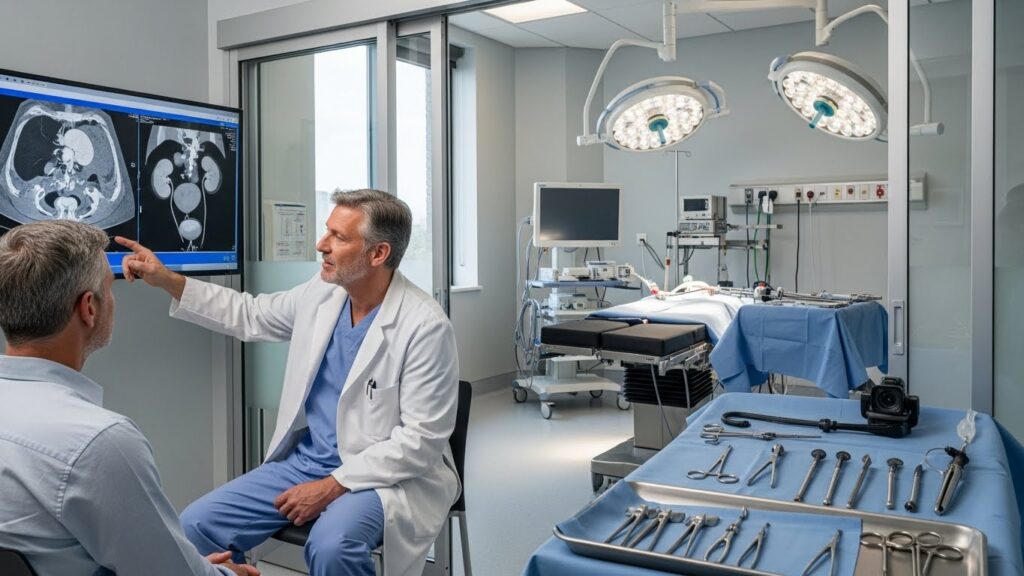
Role of Surgery in Uro-Oncology
Surgery aims to:
According to Dr. Nitin Singhal, surgical oncologist in Ahmedabad, the goal of uro-oncology surgery is not just cancer removal, but achieving the best balance between cancer control and quality of life.
Kidney Cancer Surgery Options
Partial Nephrectomy
This procedure removes only the tumor while preserving the rest of the kidney.
Recommended when:
Radical Nephrectomy
Involves removal of the entire kidney along with surrounding tissue.
Recommended when:
Robotic vs Open Kidney Surgery
Robotic surgery allows precise tumor removal with smaller incisions, while open surgery may be needed for complex or advanced cases.
Bladder Cancer Surgery Options
Bladder cancer treatment depends heavily on tumor depth and grade.
Transurethral Resection (TURBT)
A minimally invasive procedure used for early-stage bladder cancer.
Radical Cystectomy
Removal of the bladder, often with reconstruction of a new urinary pathway.
Recommended when:
Urinary Reconstruction
After bladder removal, surgeons may create:
Each option has different lifestyle implications.
Prostate Cancer Surgery Options
Radical Prostatectomy
The most common surgical treatment for localized prostate cancer.
Goals of surgery:
Robotic Prostate Surgery
Robotic techniques offer enhanced visualization of nerves and blood vessels, which can help reduce complications when performed in suitable cases.
However, not all patients are candidates for robotic surgery.
Choosing Between Robotic, Laparoscopic, and Open Surgery
The choice depends on:
| Cancer Type | Early Stage | Advanced Stage |
| Kidney | Robotic / Partial | Open / Radical |
| Bladder | TURBT | Radical cystectomy |
| Prostate | Robotic prostatectomy | Surgery + additional therapy |
Dr. Nitin Singhal emphasizes that technology should support surgical judgment—not replace it.
Lymph Node Assessment in Uro-Oncology
In many uro-oncology cancers, nearby lymph nodes are evaluated or removed during surgery to:
This step is critical in prostate and bladder cancer surgery.
Recovery After Uro-Oncology Surgery
Hospital Stay
Common Recovery Factors
Recovery timelines vary based on surgery type and individual healing capacity.
Long-Term Follow-Up and Monitoring
Uro-oncology patients require structured follow-up, which may include:
Regular follow-up helps detect recurrence early.
Importance of Specialized Surgical Care
Uro-oncology surgery requires:
Patients benefit most when treated by surgeons who routinely manage uro-oncology cases. In Ahmedabad, Dr. Nitin Singhal focuses on evidence-based surgical planning for complex cancer cases involving the urinary system.
Key Takeaways for Patients
Understanding options empowers patients to make informed decisions.
Final Thoughts
Kidney, bladder, and prostate cancers require thoughtful surgical planning that considers both cancer control and life after treatment. With advances in surgical techniques, many patients can expect effective treatment with improved recovery and functional outcomes. Careful evaluation and experienced surgical decision-making are essential to choosing the right path forward. Surgeons like Dr. Nitin Singhal highlight the importance of individualized treatment based on disease characteristics rather than a one-size-fits-all approach.


