Pancreatic cancer requires careful evaluation, experienced surgical planning and a multidisciplinary approach. Dr. Nitin Singhal provides advanced surgical care for selected patients with pancreatic cancer, with treatment planned according to the tumour, disease stage and individual patient factors.
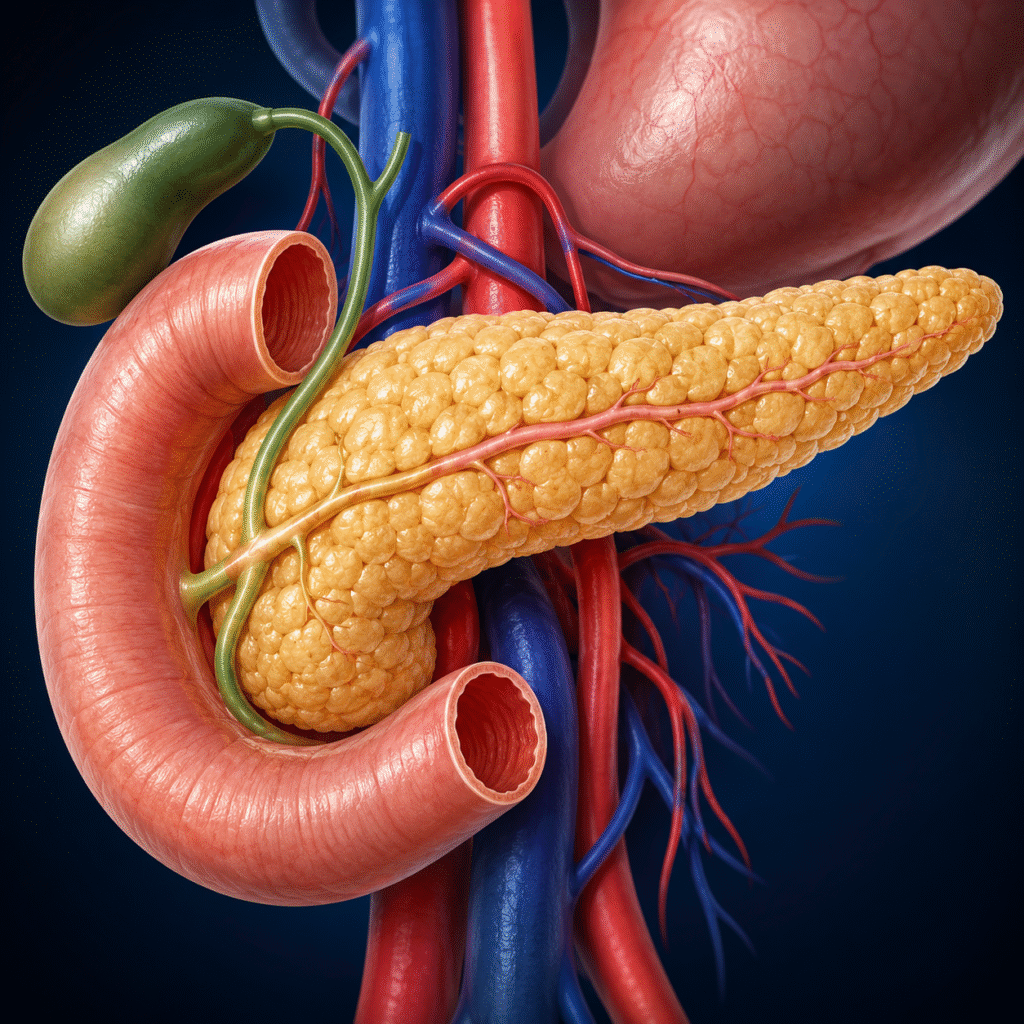
Pancreatic cancer is a complex disease that can require specialized surgical and oncological care. Treatment planning depends on the location of the tumour, its stage, involvement of nearby blood vessels or organs and the patient's overall health.
Patients looking for pancreatic cancer treatment in Ahmedabad may require a combination of surgery, chemotherapy, radiation therapy or other cancer treatments. A detailed assessment helps determine whether surgery is appropriate and which treatment approach may provide the best possible outcome.
The pancreas is an organ located behind the stomach that plays an important role in digestion and blood sugar regulation. Pancreatic cancer occurs when abnormal cells in the pancreas grow uncontrollably and form a tumour.
Because pancreatic cancer may not cause obvious symptoms during its early stages, some patients are diagnosed after the disease has progressed. Symptoms can include abdominal or back pain, jaundice, unexplained weight loss, appetite changes and digestive problems, although symptoms can vary from person to person.
Dr. Nitin Singhal has extensive experience in surgical oncology with a focus on gastrointestinal and hepatopancreatobiliary cancers. His approach emphasizes careful diagnosis, appropriate surgical selection and individualized treatment planning.
For selected patients, minimally invasive and robotic surgical techniques may be considered where clinically appropriate. The decision depends on tumour characteristics, anatomy, disease stage and the patient's overall condition.
Complex pancreatic cancer treatment may require coordination between surgical oncology, medical oncology, radiology, pathology, gastroenterology and other specialists.
Surgery may be an important part of treatment for selected patients whose pancreatic cancer can be surgically removed. The type of surgery depends primarily on the location and extent of the tumour.
The Whipple procedure, or pancreaticoduodenectomy, may be performed for selected tumours involving the head of the pancreas. The operation involves removal of the affected portion of the pancreas along with surrounding structures as required.
Distal pancreatectomy may be considered for selected tumours involving the body or tail of the pancreas. The exact surgical approach depends on the tumour and surrounding anatomy.
In selected situations, removal of the entire pancreas may be considered when required by the extent and characteristics of the disease.
Robotic or other minimally invasive approaches may be considered for appropriately selected pancreatic cancer cases after detailed assessment by the surgical team.
Robotic surgery is a minimally invasive surgical approach that may be considered in selected pancreatic cancer cases. The robotic platform allows the surgeon to control specialized instruments while providing enhanced visualization of the surgical field.
Whether robotic surgery is appropriate depends on factors such as tumour location, disease stage, anatomy, previous treatments and the overall treatment plan.
Pancreatic cancer treatment often requires more than one form of therapy. Depending on the individual case, treatment may involve surgery, chemotherapy, radiation therapy and supportive care.
A multidisciplinary approach allows specialists to review diagnostic imaging, pathology and other clinical factors before developing an individualized treatment strategy.
The most appropriate pancreatic cancer treatment depends on the stage and characteristics of the disease. Patients may undergo surgery when the tumour is considered resectable, while other treatment combinations may be recommended for locally advanced or metastatic disease.
Treatment planning may include evaluation of the pancreas, surrounding blood vessels, lymph nodes and other areas that may be involved by the disease.
Surgery may be combined with systemic treatments such as chemotherapy before or after an operation. Radiation therapy may also be considered in selected situations. The treatment sequence is determined according to the individual clinical circumstances.
Because pancreatic cancer can be complex, early evaluation by an experienced cancer team can help determine the diagnosis, stage and available treatment options. Patients should receive a treatment plan based on their individual medical condition rather than a one-size-fits-all approach.
Pancreatic cancer develops when abnormal cells in the pancreas grow uncontrollably and form a tumour. The treatment approach depends on the type, stage, location and extent of the disease.
Depending on the location and extent of the tumour, surgery may include a Whipple procedure, distal pancreatectomy or, in selected cases, total pancreatectomy.
Robotic surgery may be considered for appropriately selected patients. Suitability depends on factors such as tumour location, disease stage, anatomy and the patient's overall health.
There is no single treatment that is best for every patient. Treatment depends on the stage, location and characteristics of the cancer and may involve surgery, chemotherapy, radiation therapy or a combination of treatments.
Treatment planning generally considers imaging, pathology, disease stage, tumour location, involvement of nearby structures and the patient's overall health.
A specialist consultation can help review the diagnosis, imaging and pathology and determine whether surgery or another treatment approach may be appropriate for the individual patient.
Discuss your diagnosis and explore the surgical treatment options that may be appropriate for you.

