Urothelial Carcinoma
Also called transitional cell carcinoma, this is the most common bladder cancer and develops in the urinary-tract lining.
Dr. Nitin Singhal is a surgical oncologist in Ahmedabad providing diagnosis, surgical treatment and management for urinary bladder cancer.
Patients searching for urinary bladder cancer treatment or robotic bladder cancer surgery Ahmedabad can undergo an individual assessment based on whether the disease is non-muscle invasive, muscle invasive, locally advanced or metastatic.

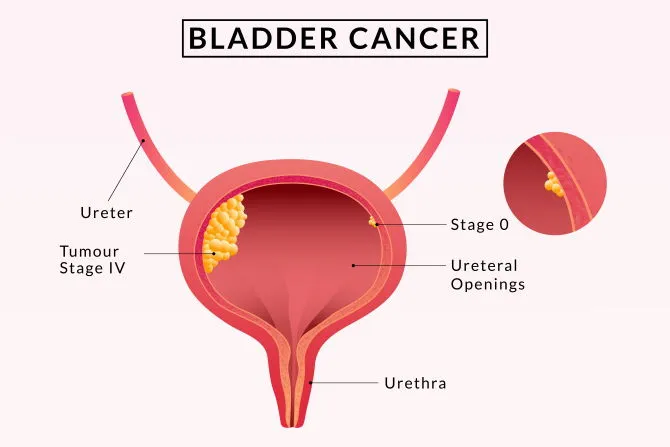
Bladder cancer develops in the cells of the urinary bladder, the organ responsible for storing urine. It is one of the common urological cancers, particularly in older adults.
Most bladder cancers are urothelial carcinomas, also called transitional cell carcinomas. Less common types include squamous cell carcinoma and adenocarcinoma.
Treatment depends on the type, stage and depth of invasion. Management may involve TURBT, intravesical treatment, partial or radical cystectomy, chemotherapy, radiation therapy or other multidisciplinary approaches.
Bladder cancer may present with urinary symptoms that can sometimes resemble a urinary infection. Persistent or unexplained changes should be medically evaluated.
Hematuria may appear as pink, red or visibly blood-stained urine and should not be ignored.
Persistent or unexplained increased urinary frequency may require evaluation.
Painful urination can have several causes, including infection, but persistent symptoms should be assessed.
Persistent pelvic pain or pressure should be medically evaluated.
Symptoms that return repeatedly or do not improve as expected require further assessment.
Persistent changes in urine flow or urinary difficulty should be investigated when unexplained.
Hematuria can occur for several reasons and does not always indicate cancer. However, unexplained blood in the urine warrants appropriate medical evaluation.
Bladder cancer can develop from different cell types, with urothelial carcinoma being the most common form.
Also called transitional cell carcinoma, this is the most common bladder cancer and develops in the urinary-tract lining.
A less common bladder cancer whose treatment depends on disease extent and individual tumour characteristics.
An uncommon bladder cancer requiring specialist evaluation and individualised treatment planning.
Treatment is tailored to the type, stage and extent of bladder cancer. Management differs significantly between non-muscle invasive and muscle-invasive disease.
Depending on the individual case, treatment may involve surgery, intravesical therapy, systemic treatment, radiation therapy or combinations of these approaches.
Treatment depends on whether the disease is non-muscle invasive, muscle invasive, locally advanced or metastatic.
TURBT bladder cancer treatment is commonly used for diagnosis and removal of visible early-stage bladder tumours through the urethra without an abdominal incision.
Selected non-muscle invasive bladder cancers may be treated with chemotherapy or BCG delivered directly into the bladder.
Partial cystectomy removes the involved portion of the bladder and may be considered in carefully selected cases.
Radical cystectomy removes the bladder and may be recommended for selected muscle-invasive or advanced cancers. Urinary diversion or reconstruction is required afterward.
Chemotherapy may form part of treatment for muscle-invasive, locally advanced or metastatic bladder cancer.
Selected patients may be considered for chemotherapy with radiation as part of a bladder-preserving treatment strategy.
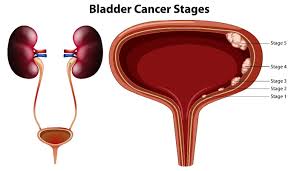
Stage describes how deeply the tumour has invaded the bladder and whether it has spread beyond the bladder.
Cancer cells are limited to the innermost bladder lining and have not invaded deeper layers. TURBT and intravesical treatment may be used where appropriate.
Cancer has grown into connective tissue beneath the lining but has not invaded the bladder muscle.
Cancer has invaded the bladder muscle. Treatment may include radical cystectomy or selected bladder-preserving chemoradiation strategies.
Disease extends beyond the bladder into surrounding tissues and/or regional lymph nodes and usually requires multidisciplinary treatment.
Stage IV disease may involve distant lymph nodes or organs. Treatment focuses on disease control, symptom management and systemic therapy selected according to the individual case.
In selected patients, bladder preservation may be considered according to tumour stage, location, extent and individual clinical factors.
A bladder-preserving strategy may involve complete tumour resection followed by chemotherapy and radiation. Suitability must be assessed individually by the treating cancer team.
Treatment selection depends on disease stage, tumour characteristics, bladder function, overall health and the patient's ability to complete multimodal therapy and surveillance.
robotic bladder cancer surgery Ahmedabad may be considered for selected bladder cancer procedures when a minimally invasive approach is appropriate.
A radical cystectomy robotic approach may be used in selected patients requiring bladder removal, depending on cancer stage, anatomy, overall health and the surgical reconstruction plan.
bladder tumor surgery may range from transurethral tumour removal to partial cystectomy or radical cystectomy depending on whether the tumour is superficial, muscle invasive or more advanced.
Surgical planning also considers lymph-node involvement, urinary function, previous treatment and the need for urinary diversion or reconstruction.
Early superficial tumours may be managed endoscopically, while muscle-invasive disease may require more extensive treatment. Accurate staging is essential before selecting surgery.
Dr. Nitin Singhal is an experienced surgical oncologist whose practice includes urologic oncology, complex cancer surgery and minimally invasive surgical techniques.
Bladder cancer treatment is planned according to tumour type, stage, depth of invasion, overall health and whether bladder preservation or more extensive surgery is appropriate.
Patients searching for robotic bladder cancer surgery Ahmedabad can undergo individual assessment to determine whether open, laparoscopic, robotic or bladder-preserving treatment is appropriate.
urinary bladder cancer treatment may include TURBT, intravesical BCG or chemotherapy, partial cystectomy, radical cystectomy, systemic chemotherapy, radiation therapy or multimodal bladder-preservation treatment.
A radical cystectomy robotic procedure may be considered for selected muscle-invasive or advanced bladder cancers when robotic minimally invasive surgery is appropriate.
bladder tumor surgery is selected according to tumour depth, stage, location, pathology, lymph-node status and the patient's overall condition.
TURBT bladder cancer treatment is central to diagnosis and initial management of many non-muscle invasive bladder tumours and may be followed by intravesical treatment and surveillance.
Patients searching for the best urinary bladder cancer surgery hospital in Ahmedabad Gujarat should consider urologic oncology expertise, TURBT and cystectomy capability, robotic technology, pathology, imaging, medical and radiation oncology, urinary-diversion expertise and postoperative care.
A bladder-cancer-specific public review plus verified cancer surgery experiences under Dr. Nitin Singhal's care.
Hasmukh Prajapati shared that Dr. Nitin Singhal performed his uncle's bladder cancer surgery skilfully and explained the treatment in a polite and clear manner.
Nirbheek Doyal highlighted clear explanations, careful pre-surgery preparation, smooth surgery and attentive postoperative follow-up for a relative treated by Dr. Singhal.
Abbas Taarahmed shared gratitude after his wife was treated for advanced cancer in Ahmedabad and described a successful treatment outcome under Dr. Singhal's care.
Common questions about symptoms, diagnosis, treatment, surgery and bladder preservation.
Blood in the urine is one of the most important warning signs. Other symptoms can include frequent urination, burning or pain during urination and pelvic discomfort. Persistent or recurring symptoms should be evaluated.
No. Hematuria can occur for several reasons. However, unexplained blood in the urine should not be ignored and may require specialist investigation.
TURBT stands for Transurethral Resection of Bladder Tumor. The visible tumour is removed through the urethra using a specialised instrument without an abdominal incision.
No. Many non-muscle invasive cancers are treated with TURBT and intravesical therapy. Selected muscle-invasive cancers may also be considered for bladder-preserving chemoradiation depending on individual factors.
Radical cystectomy is removal of the urinary bladder and is used for selected muscle-invasive or advanced bladder cancers. A urinary diversion or reconstruction is required after bladder removal.
BCG is an intravesical immunotherapy used for selected non-muscle invasive bladder cancers. It is delivered directly into the bladder rather than given systemically.
Robotic surgery can provide a minimally invasive option for selected bladder cancer procedures. Suitability depends on cancer stage, required operation, health status and the surgeon's assessment.
Yes. Bladder cancer can recur, particularly non-muscle invasive disease. Regular surveillance is therefore an important part of follow-up after treatment.
Outcome depends on cancer type, stage, extent of spread and response to treatment. Many early bladder cancers can be treated effectively, while advanced disease may require combined surgical and systemic treatment.
If you have noticed blood in your urine, persistent urinary symptoms or have already been diagnosed with bladder cancer, discuss appropriate evaluation and personalised treatment planning with an experienced cancer specialist.
Book an Appointment
Dr. Nitin Singhal has been recognised for his contribution to cancer care and surgical oncology, reflecting his commitment to advanced surgical techniques, clinical excellence and patient-centred care.
Surgical oncology training from Tata Memorial Hospital, Mumbai.
Expertise across complex and multidisciplinary cancer surgery.
Honoured for excellence in healthcare and surgical oncology.
Focus on evidence-based and personalised cancer treatment.
Recognition that reflects a continued commitment to excellence in cancer care.