



Robotic cancer surgery is often advertised as the “latest” or “best” option but that’s only half the truth. While robotic systems have transformed how certain cancers are treated, they are not suitable for every patient or every cancer. If you are exploring robotic cancer surgery in Ahmedabad, this guide will help you understand:
This clarity is essential before making a treatment decision.
What Is Robotic Cancer Surgery?
Robotic cancer surgery is a form of minimally invasive surgery where the surgeon controls robotic arms using a high-precision console. The robot does not act independently; every movement is guided by the surgeon.
Key features include:
For selected cancers, robotic surgery allows more accurate tumor removal with less trauma to surrounding tissues.
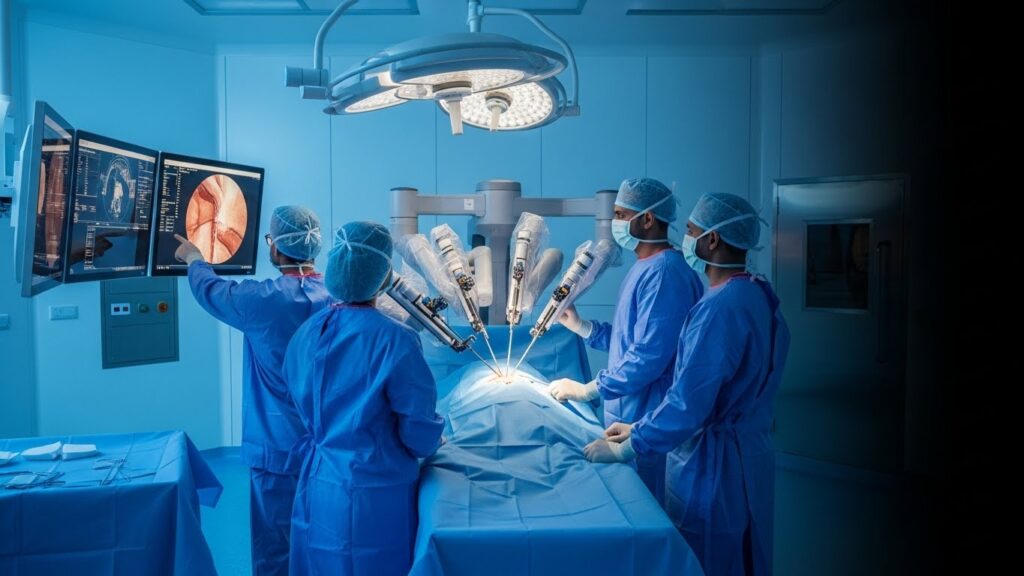
How Robotic Surgery Is Different from Open and Laparoscopic Surgery
Open Surgery
Laparoscopic Surgery
Robotic Surgery
This is why robotic cancer surgery in Ahmedabad is increasingly used for cancers in anatomically difficult regions.
Cancers Where Robotic Surgery Is Commonly Used
Robotic techniques are most effective in cancers that require precision rather than wide exposure.
These include:
In many GI and pelvic cancers, robotic surgery improves nerve preservation and functional outcomes.
Real Benefits of Robotic Cancer Surgery (No Exaggeration)
1. Better Precision in Confined Spaces
The robotic system allows surgeons to operate effectively in deep pelvic or narrow anatomical areas where traditional instruments struggle.
2. Less Blood Loss
Smaller incisions and controlled movements often reduce intraoperative bleeding.
3. Faster Recovery
Many patients experience:
4. Improved Visualization
Magnified 3D views help surgeons identify critical structures, reducing unintended injury.
These advantages explain why robotic surgery is often recommended by an experienced cancer surgeon in Ahmedabad for selected cases.
Important Truth: Robotic Surgery Is NOT for Everyone
This is where marketing usually lies.
Robotic cancer surgery is not automatically better in:
In such cases, open surgery or alternative approaches may be safer.
Risks and Limitations You Should Know
Robotic surgery is safe when done by trained surgeons, but it still carries risks:
That’s why robotic surgery should be chosen based on indication, not trend.
Who Is the Right Candidate for Robotic Cancer Surgery?
You may benefit if:
Your suitability must be decided after proper evaluation by a surgical oncologist, not by advertisements.
Robotic Surgery vs Chemotherapy: How They Work Together
Robotic surgery does not replace chemotherapy.
In many cancers:
In advanced abdominal cancers, surgery may also be combined with specialized treatments like HIPEC surgery in Ahmedabad, depending on cancer type and spread.
Role of Robotic Surgery in GI, Gynecologic, and Uro-Oncology Cancers
Robotic techniques are commonly integrated with:
This cross-specialty use improves outcomes when performed by a team experienced in robotic oncology.
When You Should Seek a Second Opinion Before Robotic Surgery
You should consider a second opinion if:
A structured cancer second opinion ensures that robotic surgery is truly appropriate for your case.
Patient-Friendly Bottom Line
Robotic cancer surgery is a powerful tool, not a miracle cure.
When used correctly:
When used blindly:
The decision should always be based on medical evidence and individual evaluation, guided by an experienced surgical oncologist.
Final Takeaway
If you are considering robotic cancer surgery in Ahmedabad, focus on:
Informed decisions not trends lead to better cancer outcomes.


