
Rectal Bleeding
Blood in or on the stool or persistent rectal bleeding should be assessed.
Rectal cancer treatment requires careful assessment of the tumour location, stage and relationship with surrounding pelvic structures. Treatment is planned around the individual patient rather than following a fixed approach.
Patients searching for rectal cancer treatment Ahmedabad or robotic rectal cancer surgery Ahmedabad can undergo an individual surgical oncology assessment based on disease stage, pelvic anatomy and overall treatment requirements.
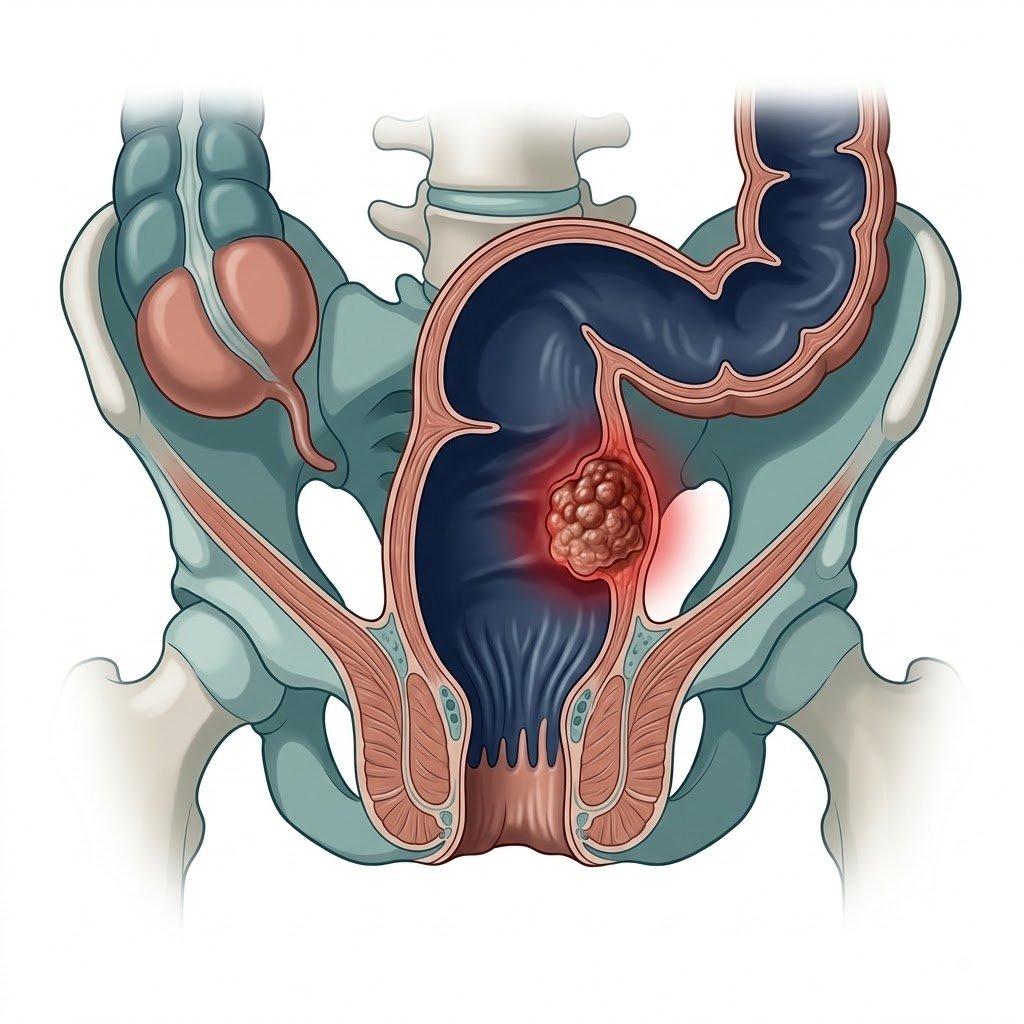
Rectal cancer treatment is rarely a one-step decision. Tumour height within the rectum, pelvic anatomy, lymph-node involvement, sphincter relationship and response to preoperative treatment can all influence the treatment sequence.
Treatment may involve surgery, chemotherapy, radiation therapy or combinations of treatments. The sequence is selected according to the individual cancer rather than using the same pathway for every patient.
Rectal cancer develops in the rectum, the lower part of the large intestine. Because the rectum lies within the pelvis and close to important surrounding structures, treatment can require a more specialised approach than cancer in other parts of the bowel.
Treatment planning may involve surgery, chemotherapy, radiation therapy or combinations of these treatments depending on the stage and characteristics of the disease.
The rectum lies within a confined pelvic space close to urinary, reproductive and sphincter structures. Surgical planning therefore needs to account for cancer control, anatomy and functional considerations.
Rectal cancer symptoms can overlap with several common bowel conditions. Persistent or unusual changes should be medically evaluated rather than assumed to be minor.
Blood in or on the stool or persistent rectal bleeding should be assessed.
Persistent changes in bowel frequency, consistency or usual pattern may require evaluation.
A persistent feeling that the bowel has not completely emptied can be a concerning symptom.
Unexplained weight loss, weakness or persistent fatigue should be evaluated in the appropriate clinical context.
A treatment strategy starts with accurate diagnosis and assessment of how far the cancer has progressed.
Medical history and physical assessment help determine the appropriate investigations and next steps.
Examination of the bowel and tissue analysis help confirm the diagnosis and tumour characteristics.
Imaging helps assess the rectal tumour, lymph nodes, pelvic structures and possible distant disease.
Diagnostic and staging findings are reviewed together to determine the appropriate sequence of treatment.
Rectal cancer treatment may involve different combinations of surgery, systemic treatment and radiation therapy. The sequence depends on the individual patient's disease.
Surgery may be recommended when appropriate to remove the rectal tumour and surrounding tissue. The procedure is selected according to tumour location, stage and anatomy.
Selected patients may be considered for robotic-assisted rectal surgery. Suitability depends on the tumour, anatomy, previous treatment and overall treatment plan.
Chemotherapy and selected systemic treatments may be used before or after surgery, or for advanced disease, depending on the clinical situation.
Radiation therapy may be incorporated for selected locally advanced rectal cancers, often as part of a broader multimodal strategy.
The objective is to select an appropriate treatment pathway based on disease characteristics, patient condition and clinical requirements.
Rectal cancer may require coordinated input from surgical oncology, medical oncology, radiation oncology, radiology and pathology.
robotic rectal cancer surgery Ahmedabad may be considered when the tumour can be treated safely with a minimally invasive pelvic approach.
low anterior resection robotic surgery may be used for selected tumours where the rectum can be resected and bowel continuity reconstructed while maintaining appropriate cancer margins.
The exact operation depends on tumour height, relationship to the anal sphincter, response to any preoperative treatment, pelvic anatomy and other patient-specific factors.
rectal tumor surgery is planned to remove the cancer with appropriate oncological principles while considering bowel continuity, sphincter preservation and surrounding pelvic structures where clinically possible.
Rectal cancer is not treated identically at every stage. Disease extent is an important part of deciding the treatment sequence.
Early disease may be treated with an appropriate surgical approach depending on tumour characteristics and location.
Locally advanced disease may require combinations of systemic treatment, radiation and surgery.
Lymph-node involvement generally requires multimodal treatment planned according to individual disease characteristics.
Metastatic disease is treated according to the location and extent of spread, overall health and potential roles for systemic and local treatments.
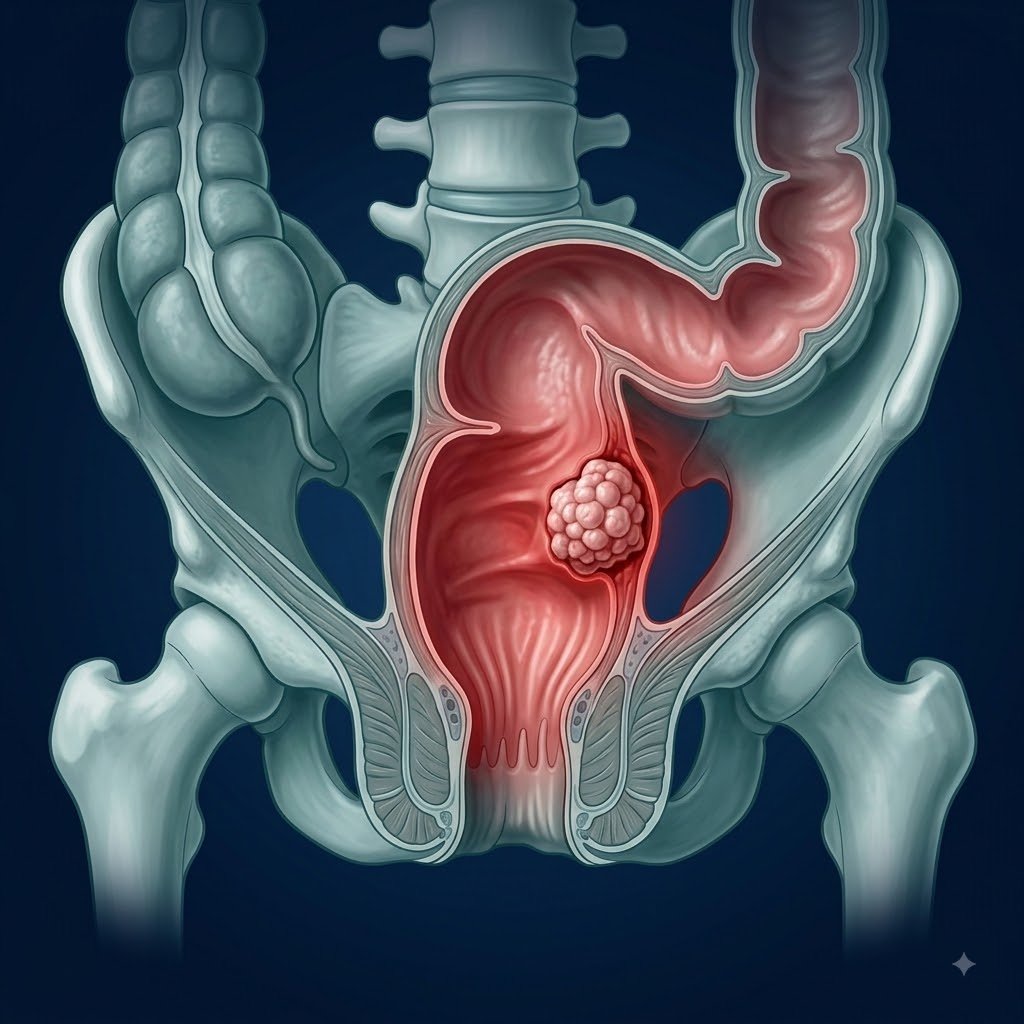
Rectal surgery can be technically demanding because of the confined pelvic anatomy and proximity of important structures.
The surgical approach is selected after considering tumour location, stage, anatomy, previous treatment and the patient's overall condition.

Cancer treatment can involve multiple decisions. Understanding the disease and choosing an appropriate treatment strategy is an important part of the journey.
Dr. Nitin Singhal provides surgical oncology care with experience in advanced and minimally invasive surgical approaches, with treatment decisions based on the patient's individual clinical situation.
Patients looking for a rectum cancer surgeon can undergo assessment for rectal resection, robotic or open surgery, sphincter-preservation possibilities and multidisciplinary treatment planning.
Patients searching for robotic rectal cancer surgery Ahmedabad can undergo assessment to determine whether robotic, laparoscopic or open pelvic surgery is appropriate for their cancer.
rectal cancer treatment Ahmedabad may involve surgery, chemotherapy, radiation therapy or combinations of these treatments depending on disease stage, tumour location and response to treatment.
low anterior resection robotic surgery may be considered for selected rectal cancers when tumour location and anatomy allow appropriate resection and reconstruction.
rectal tumor surgery requires detailed assessment of tumour height, pelvic anatomy, sphincter relationship, lymph nodes and any previous chemotherapy or radiation.
Patients looking for a rectum cancer surgeon should consider colorectal surgical oncology experience, minimally invasive capability, multidisciplinary planning and expertise in technically demanding pelvic surgery.
Patients searching for the best rectal cancer surgery hospital in Ahmedabad should consider surgical oncology expertise, robotic capability, high-quality imaging, pathology, radiation and medical oncology, anaesthesia, postoperative care and appropriate sphincter-preserving planning rather than technology alone.
Publicly documented rectal and colorectal cancer cases involving advanced or robotic surgery under Dr. Nitin Singhal's care.
Dr. Singhal's official gallery documents a challenging rectal cancer case from Bangladesh involving multiple medical conditions, including previous cardiac bypass, uncontrolled diabetes, obesity and sleep apnoea, that was successfully treated with robotic surgery.
Sterling Hospitals features a patient recovery story titled “Healing from Colorectal Cancer with Robotic Precision,” highlighting robotic colorectal cancer care under Dr. Nitin Singhal.
Dr. Singhal's official surgical gallery also documents international rectal cancer care, including a patient from Tanzania who underwent surgery for rectal cancer.
Important questions about rectal cancer symptoms, diagnosis and treatment.
Possible symptoms include rectal bleeding, blood in the stool, persistent changes in bowel habits, a feeling of incomplete bowel emptying, abdominal or pelvic discomfort, unexplained weight loss and fatigue.
Diagnosis may involve clinical examination, colonoscopy, biopsy and imaging. Staging investigations help determine tumour extent, lymph-node involvement and the appropriate treatment sequence.
Robotic surgery may be considered for selected rectal cancers when a minimally invasive pelvic approach is appropriate. Suitability depends on tumour location, stage, anatomy, previous treatment and patient factors.
Yes. Radiation therapy may form part of treatment for selected locally advanced rectal cancers, often in combination with chemotherapy and surgery depending on the individual treatment strategy.
Not every rectal cancer follows the same pathway. Surgery is important for many patients, but treatment depends on disease stage, tumour response, location, overall health and multidisciplinary assessment.
Seek specialist evaluation after a confirmed rectal cancer diagnosis, an abnormal biopsy or imaging result, or persistent symptoms such as rectal bleeding, altered bowel habits or unexplained weight loss.
Discuss your diagnosis, disease stage and available treatment options with a surgical oncology specialist experienced in rectal and colorectal cancer care.
Book an Appointment
Dr. Nitin Singhal has been recognised for his contribution to cancer care and surgical oncology, reflecting his commitment to advanced surgical techniques, clinical excellence and patient-centred care.
Surgical oncology training from Tata Memorial Hospital, Mumbai.
Expertise across complex and multidisciplinary cancer surgery.
Honoured for excellence in healthcare and surgical oncology.
Focus on evidence-based and personalised cancer treatment.
Recognition that reflects a continued commitment to excellence in cancer care.
