Typical Carcinoid
A lower-grade pulmonary neuroendocrine tumour that generally shows slower growth and fewer aggressive microscopic features than an atypical carcinoid.
Carcinoid tumours are neuroendocrine tumours that can develop in the airways and lungs. Treatment depends on the tumour's location, size, type, lymph-node involvement and whether it has spread.
Carcinoid tumours are a type of neuroendocrine tumour. In the thorax, they commonly arise in the bronchi and lungs. Their behaviour can vary, so diagnosis and treatment planning are tailored to the individual tumour.
Some pulmonary carcinoid tumours are discovered during evaluation for respiratory symptoms or incidentally on imaging. Tumours involving the airways can sometimes cause symptoms related to airway obstruction.
The treatment approach depends on tumour size and location, whether it is a typical or atypical carcinoid, lymph-node involvement and whether there is disease outside the lung.
For selected localised tumours, surgery may form an important part of treatment. The exact operation is determined after reviewing imaging, bronchoscopy, pathology and the patient's overall condition.
A multidisciplinary assessment can help determine whether observation, endoscopic management, surgery or other cancer treatments are appropriate for an individual patient.
Pulmonary carcinoids are generally classified into typical and atypical carcinoids. Pathology helps determine the tumour type and contributes to treatment planning.
A lower-grade pulmonary neuroendocrine tumour that generally shows slower growth and fewer aggressive microscopic features than an atypical carcinoid.
A pulmonary neuroendocrine tumour with features associated with a greater risk of recurrence or spread compared with typical carcinoid.
Some carcinoid tumours arise within the airways and may cause cough, recurrent chest infections, wheezing or other symptoms from airway obstruction.
Assessment of nearby lymph nodes is important because nodal involvement can influence staging, surgical planning and the overall treatment strategy.
Some carcinoid tumours may cause no symptoms and are found incidentally. When a tumour affects an airway, symptoms may resemble other respiratory conditions.
A continuing cough may occur when a tumour affects an airway.
Airway narrowing or obstruction can sometimes produce wheezing or shortness of breath.
An obstructing endobronchial tumour may contribute to repeated infections in part of the lung.
Blood in sputum can occur with some airway tumours and should be medically evaluated.
Diagnosis combines clinical assessment, imaging, bronchoscopy and tissue evaluation. The tests selected depend on the suspected tumour location and the clinical situation.
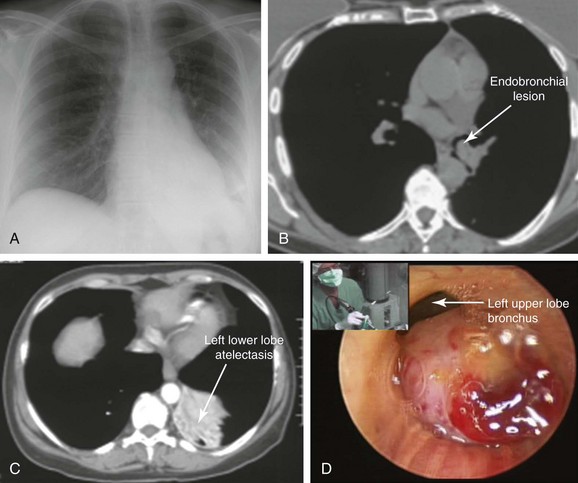
Chest imaging such as CT can help identify the size, location and relationship of a pulmonary carcinoid tumour to the airways and surrounding structures.
Bronchoscopy may be used when a tumour is located within or close to the bronchial tree. It allows direct visualisation of the airway and, when appropriate, tissue sampling.
Pathology helps establish the neuroendocrine tumour type and grade-related features. Additional imaging may be recommended when there is a concern about lymph-node involvement or disease elsewhere.
Review of symptoms, medical history and respiratory findings helps determine the next diagnostic steps.
CT imaging can define the tumour's location, size and relationship with the bronchial tree and nearby structures.
Direct examination of the airways may help identify endobronchial disease and obtain tissue when indicated.
Tissue diagnosis and assessment of spread help guide the appropriate treatment strategy.
Surgery may be considered for selected localised pulmonary carcinoid tumours. The procedure depends on tumour size, location, airway involvement, lymph nodes and the amount of healthy lung that can be preserved safely.
When appropriate, surgery aims to remove the tumour with adequate margins while considering preservation of healthy lung tissue.
For selected tumours, the surgical plan may focus on preserving as much functioning lung tissue as safely possible.
Removal of an affected lung lobe may be considered when the tumour's location or extent makes this the appropriate surgical approach.
Nearby lymph nodes may be assessed or removed during surgery when clinically indicated to support accurate staging and treatment planning.
No single procedure is suitable for every carcinoid tumour. The treatment plan is based on the patient's diagnosis, tumour characteristics, overall health and evidence of spread.
Each patient's pathway is different. The following steps provide a general framework for evaluating a suspected carcinoid tumour.
Symptoms, previous reports and medical history are reviewed to understand the clinical picture.
Appropriate imaging, bronchoscopy and pathology are used to establish the diagnosis and tumour features.
The tumour's location, lymph nodes and possible spread are assessed before deciding on treatment.
Surgery or other appropriate treatments are considered according to the individual diagnosis.
Carcinoid tumours of the lung require careful evaluation because their location within the airways, tumour type, lymph-node involvement and overall extent can influence treatment decisions.
For selected patients with localised pulmonary carcinoid tumours, surgical removal may be an important part of treatment. Depending on the tumour's location and extent, the surgical approach may range from more limited lung-preserving procedures to removal of an affected lobe, with lymph-node assessment when indicated.
Answers to common questions about pulmonary carcinoid tumours, diagnosis and treatment.
Carcinoid tumours are a type of neuroendocrine tumour. Their behaviour can vary, and pulmonary carcinoids are generally classified as typical or atypical based on pathological features.
Typical and atypical carcinoids differ in their microscopic features and growth behaviour. Atypical carcinoids generally have features associated with a higher risk of recurrence or spread.
Evaluation may include clinical assessment, CT imaging, bronchoscopy and tissue pathology. Additional investigations may be recommended depending on the tumour and suspected extent of disease.
Not every tumour requires the same treatment. Surgery may be considered for selected localised tumours, while the appropriate approach depends on tumour location, size, type, lymph nodes, spread and the patient's overall condition.
Yes. Some pulmonary carcinoid tumours arise within the bronchial tree. These endobronchial tumours can sometimes cause cough, wheezing, recurrent chest infections or coughing up blood.
In selected patients, a lung-preserving operation may be possible depending on the tumour's size, location and relationship with the airway and surrounding structures. The appropriate procedure is decided after detailed evaluation.
If disease has spread, treatment planning becomes more complex and may involve surgery, medicines or other cancer treatments depending on the location and extent of disease. The treatment plan is individualised.
The plan is based on pathology, tumour size and location, airway involvement, lymph-node status, evidence of spread and the patient's overall health. These factors are considered together before recommending treatment.
Bring your scans, pathology reports and previous medical records for an evaluation and discussion of the available treatment options.
Book an AppointmentExplore specialised cancer treatment and surgical oncology services, organised by area of expertise.
Advanced surgical approaches for selected complex cancers.
Specialised surgical oncology care for women's cancers.
Specialised treatment and surgical care for ovarian cancer.
Comprehensive care for selected gynaecological cancers.
Individualised cervical cancer evaluation and surgical care.
Surgical and multidisciplinary care for uterine cancers.
Specialised surgical care for gastrointestinal cancers.
Cancer care for the urinary system and male reproductive organs.
Comprehensive surgical care for urological cancers.
Specialised surgical treatment for kidney cancer.
Personalised surgical care for prostate cancer.
Evaluation and surgical treatment of testicular cancer.
Diagnosis and surgical management of bladder cancer.
Specialised surgical oncology care for head and neck cancers.
Specialised surgical care for breast cancer.
Specialised cancer care for children and young patients.

Dr. Nitin Singhal has been recognised for his contribution to cancer care and surgical oncology, reflecting his commitment to advanced surgical techniques, clinical excellence and patient-centred care.
Surgical oncology training from Tata Memorial Hospital, Mumbai.
Expertise across complex and multidisciplinary cancer surgery.
Honoured for excellence in healthcare and surgical oncology.
Focus on evidence-based and personalised cancer treatment.
Recognition that reflects a continued commitment to excellence in cancer care.