Pleural mesothelioma is a rare cancer that develops in the lining surrounding the lungs. Treatment is individualized according to the type and stage of disease, overall health, and whether surgery and other treatments may be appropriate.
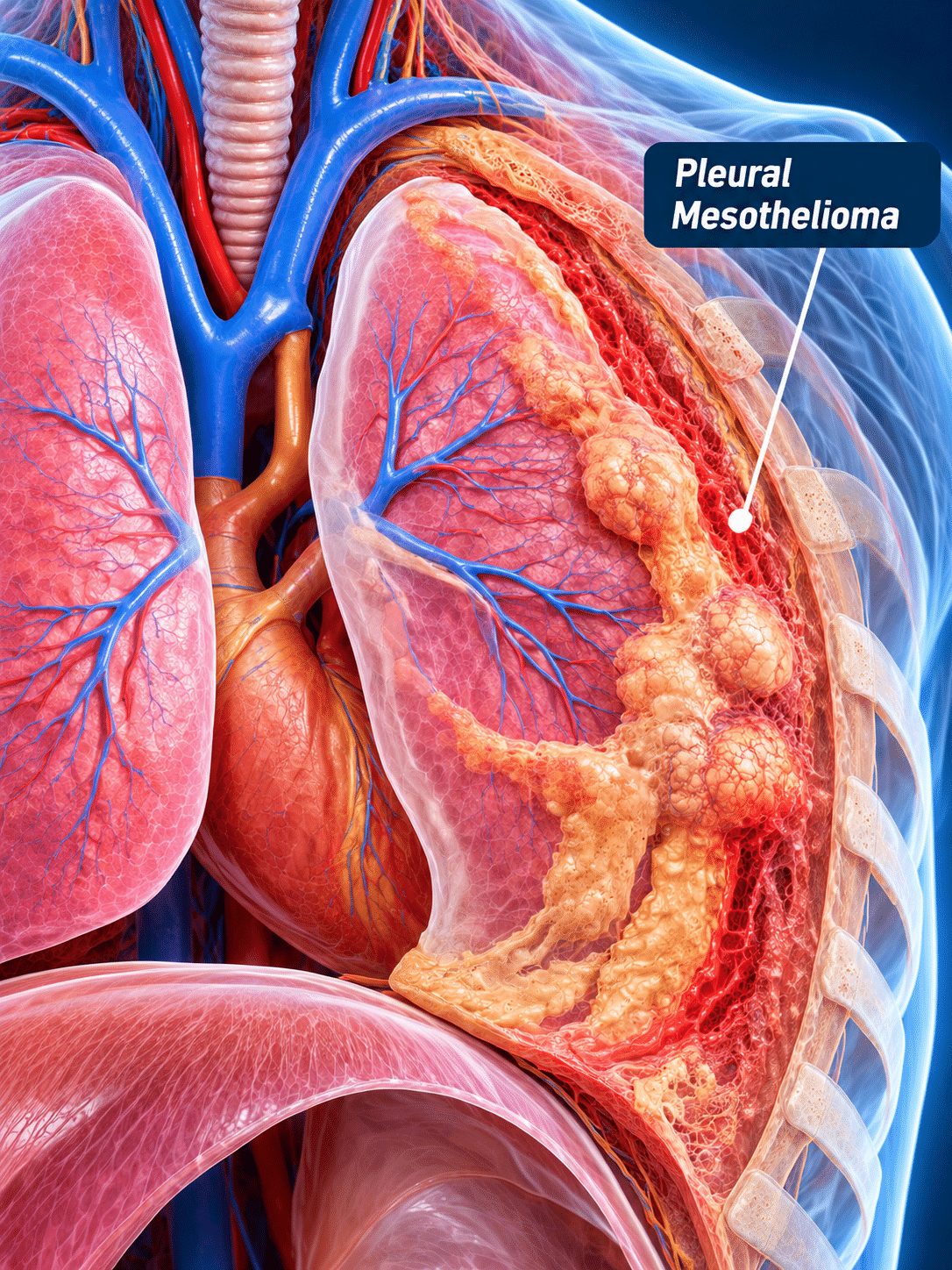
Understanding where pleural mesothelioma develops and how it behaves is an important part of planning treatment.
Pleural mesothelioma is a cancer that develops in the pleura, the thin layer of tissue surrounding the lungs and lining the inside of the chest. It is an uncommon cancer and can sometimes be difficult to diagnose because its symptoms may resemble other chest or respiratory conditions.
Diagnosis generally requires a combination of clinical assessment, imaging and tissue evaluation. Once the diagnosis is confirmed, treatment planning considers the extent of disease, tumour characteristics and the patient's overall health.
Depending on the individual situation, treatment may involve surgery, systemic therapy, radiation therapy, or a combination of approaches.
The most appropriate treatment approach depends on factors such as disease stage, tumour characteristics, operability, overall health and the patient's treatment goals.
Symptoms can vary between individuals and may also occur with several other chest conditions. Persistent or unexplained symptoms should be medically evaluated.
Persistent or unexplained pain or discomfort in the chest may require further evaluation.
Difficulty breathing may occur, particularly when fluid accumulates around the lung.
A continuing cough or change in respiratory symptoms may be one of the presenting features.
Fluid around the lung can cause breathlessness, chest discomfort and other respiratory symptoms.
Accurate diagnosis is important because treatment depends on confirming the disease and understanding its extent.
A detailed medical history, symptom assessment and physical examination help determine the next diagnostic steps.
Imaging such as CT scans may be used to evaluate the pleura, lungs, chest structures and possible spread of disease.
A biopsy may be required to confirm mesothelioma and determine its histological characteristics.
Additional investigations may be recommended to determine the extent of disease and help guide treatment planning.
Treatment may involve one or more approaches. The final treatment plan is determined after evaluating the disease, the patient's overall health and the potential benefits and risks of each option.
Surgery may be considered for selected patients when the disease can be treated surgically. The surgical approach depends on the location and extent of the tumour and the patient's overall condition.
Systemic chemotherapy may be used to treat mesothelioma and can form part of treatment before or after surgery or as part of treatment when surgery is not appropriate.
Immunotherapy may be an option for certain patients, depending on disease characteristics, treatment setting and suitability for the therapy.
Radiation therapy may be considered in selected situations, including for local disease control or symptom management.
Surgery is not appropriate for every person with pleural mesothelioma. In selected patients, surgery may be considered as part of a multimodal treatment plan.
The decision depends on factors including the extent and distribution of disease, histological type, lymph-node involvement, overall health and whether the disease can be treated safely with surgery.
A detailed evaluation is therefore important before deciding whether a surgical approach is suitable.
The potential benefits, risks and expected outcomes of surgery should be discussed after a complete assessment of the individual patient's disease and overall health.
Pleural mesothelioma can require more than one type of treatment. A multidisciplinary approach allows different aspects of the disease to be considered when developing an individualized treatment plan.
Depending on the patient's condition, treatment may involve a combination of surgery, systemic therapy and radiation therapy rather than relying on a single treatment approach.
Every patient's pathway is different, but treatment planning generally follows a structured evaluation.
Existing reports, scans, biopsy findings and medical history are reviewed to understand the diagnosis.
Imaging and other investigations may be used to determine the extent and distribution of disease.
Suitable treatment options and their potential benefits and risks are discussed with the patient.
Treatment is initiated according to the individualized plan and adjusted when clinically required.

Dr. Nitin Singhal is a surgical oncologist in Ahmedabad with experience in the surgical management of different types of cancer.
For patients with pleural mesothelioma, consultation can help determine whether a surgical approach may be appropriate and whether additional cancer treatments should form part of the overall treatment plan.
Pleural mesothelioma is a rare cancer affecting the lining of the lungs and chest cavity. Because it is an uncommon disease, evaluation and treatment planning require careful assessment of the diagnosis, disease extent and the patient's overall health.
Treatment for pleural mesothelioma may include surgery, chemotherapy, immunotherapy, radiation therapy or a combination of these approaches. The appropriate treatment depends on factors such as the stage of the disease, histological characteristics, operability and the patient's individual circumstances.
Pleural mesothelioma surgery may be considered in selected patients after assessing whether the disease can be treated safely and meaningfully through a surgical approach. Surgical treatment should be planned as part of an overall cancer care strategy rather than considered in isolation.
Patients seeking pleural mesothelioma treatment in Ahmedabad can undergo a specialist consultation to review their diagnosis, imaging, pathology reports and available treatment options.
If you have already received a diagnosis of pleural mesothelioma, bringing your biopsy reports, imaging scans, previous treatment records and medication details can help the specialist understand your medical history and plan the next steps.
Answers to common questions about diagnosis, treatment and surgical evaluation.
Pleural mesothelioma is a rare cancer that develops in the pleura, the tissue lining around the lungs and inside the chest. Diagnosis generally requires imaging and tissue evaluation.
Depending on the individual case, treatment may include surgery, chemotherapy, immunotherapy, radiation therapy or a combination of treatments. The appropriate approach depends on disease characteristics, stage, overall health and treatment suitability.
Surgery may be considered for selected patients. Whether surgery is appropriate depends on factors such as the extent and distribution of disease, tumour characteristics, overall health and the ability to safely perform the planned procedure.
Yes. Systemic chemotherapy can be part of treatment for pleural mesothelioma. Its role and timing depend on the patient's disease and the overall treatment strategy recommended by the cancer care team.
Immunotherapy may be considered for certain patients with pleural mesothelioma depending on disease characteristics, treatment setting and individual suitability. The treating oncology team can determine whether it is appropriate.
Treatment planning considers the confirmed diagnosis, histological type, disease stage and distribution, overall health, previous treatments, suitability for surgery and the patient's individual treatment goals.
A surgical oncology consultation may be useful after a confirmed diagnosis or when surgery is being considered. Bringing pathology reports, imaging scans and previous treatment records can help with the assessment.
No. Treatment needs to be individualized. The recommended approach can differ according to the extent of disease, tumour characteristics, overall health, previous treatment and whether surgery or other therapies are suitable.
Get your diagnosis, pathology reports and imaging reviewed to understand the available treatment options and whether surgical evaluation may be appropriate.
Book a Consultation
Dr. Nitin Singhal has been recognised for his contribution to cancer care and surgical oncology, reflecting his commitment to advanced surgical techniques, clinical excellence and patient-centred care.
Surgical oncology training from Tata Memorial Hospital, Mumbai.
Expertise across complex and multidisciplinary cancer surgery.
Honoured for excellence in healthcare and surgical oncology.
Focus on evidence-based and personalised cancer treatment.
Recognition that reflects a continued commitment to excellence in cancer care.

