Gallbladder cancer is a rare cancer that can be difficult to detect in its early stages. Treatment depends on the stage, tumour location, whether the cancer can be completely removed, and the patient's overall health.
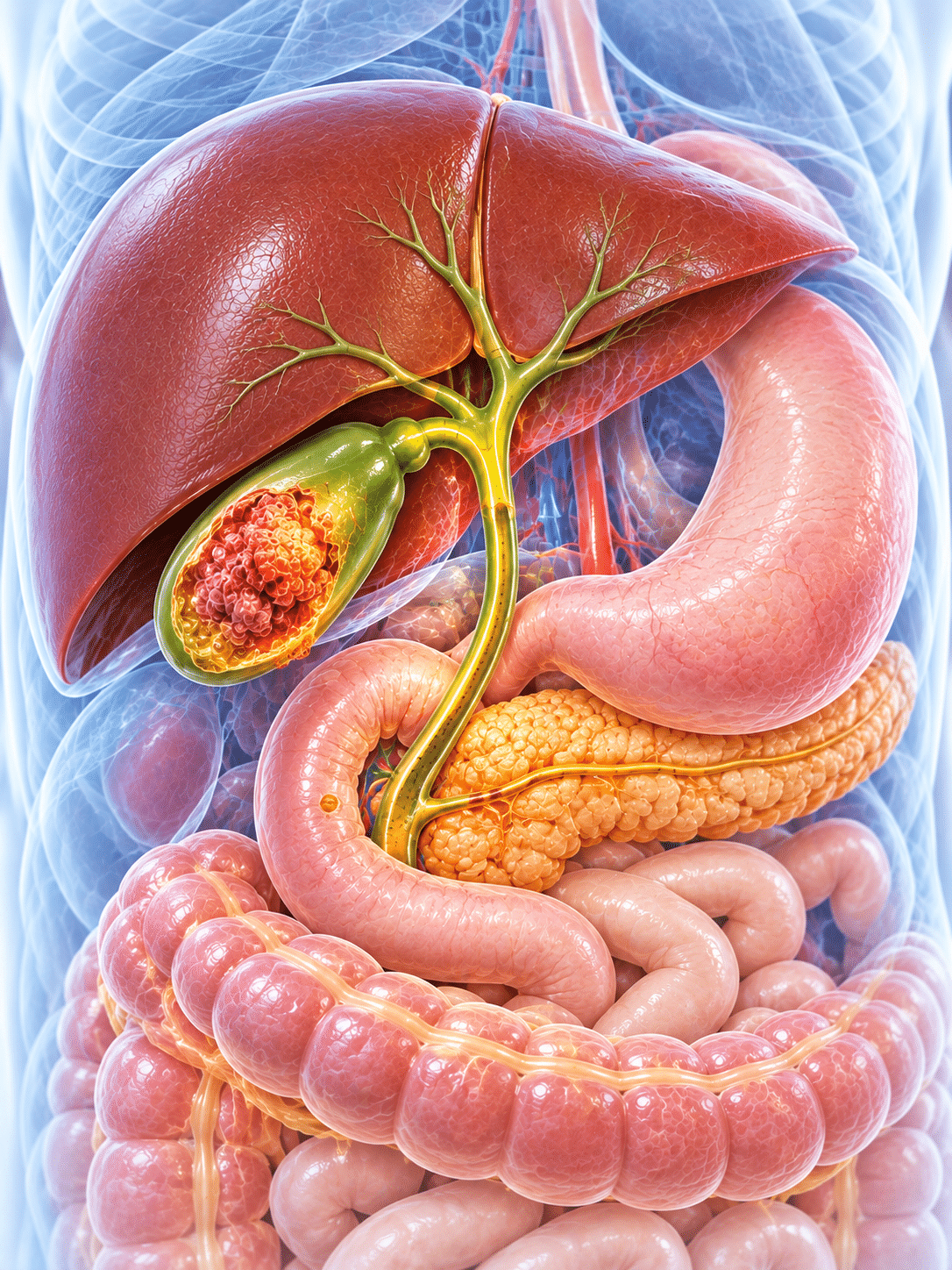
Gallbladder cancer develops when abnormal cells in the gallbladder begin to grow uncontrollably. The gallbladder is a small, pear-shaped organ located beneath the liver that stores bile produced by the liver.
Gallbladder cancer is uncommon and may not cause noticeable symptoms in its early stages. It is sometimes discovered unexpectedly after the gallbladder has been removed for another condition.
When gallbladder cancer is diagnosed, further evaluation is needed to determine its stage and whether it can be completely removed with surgery.
Early gallbladder cancer may have few or no specific symptoms. Because the gallbladder lies beneath the liver, the disease can sometimes be discovered only after surgery or during evaluation for another gallbladder condition.
The gallbladder is part of the biliary system and works closely with the liver and bile ducts to store and transport bile.
A small pear-shaped organ beneath the liver that stores and concentrates bile.
The duct connecting the gallbladder to the larger bile duct system.
Ducts that carry bile away from the liver toward the common bile duct.
Carries bile toward the small intestine to assist with digestion.
The gallbladder wall contains several layers. Gallbladder cancer can grow from the inner lining through deeper layers of the wall and may eventually extend into nearby tissues.
The depth of tumour invasion is one of the factors considered when determining the stage and treatment approach.
The extent to which cancer has grown through the gallbladder wall and into nearby structures helps determine whether additional surgery or other treatments may be required.
Gallbladder cancer may cause few symptoms in its early stages. When symptoms occur, they can resemble other gallbladder or digestive conditions.
Persistent pain or discomfort in the upper abdomen may require medical evaluation.
Yellowing of the skin or eyes can occur when bile flow is obstructed.
Persistent nausea or vomiting may occur with gallbladder disease and other digestive conditions.
Fever may occur in some patients and can have many different causes.
Persistent abdominal bloating can occur with several gastrointestinal and hepatobiliary conditions.
Unintentional weight loss may require investigation, particularly when accompanied by other symptoms.
Gallstones are associated with an increased risk of gallbladder cancer, although most people with gallstones do not develop gallbladder cancer.
Long-standing inflammation of the gallbladder may be associated with gallbladder cancer risk.
Certain abnormalities affecting the bile ducts can be associated with an increased risk of biliary cancers.
Certain gallbladder polyps may require closer evaluation depending on their size and other characteristics.
Imaging, blood tests and other investigations help determine the extent of disease and whether the tumour may be surgically removable.
Ultrasound can provide images of the gallbladder and may help identify abnormalities or masses.
CT imaging can help assess the gallbladder, liver, nearby structures and possible spread of disease.
MRI-based imaging can provide detailed information about the liver and bile duct system when appropriate.
Blood tests may help assess liver function and identify abnormalities that require further investigation.
Staging determines how far the cancer has grown or spread. It helps doctors understand whether the disease is localised, locally advanced or has spread to distant sites.
One of the most important questions is whether the tumour can be completely removed with surgery. This assessment helps guide the overall treatment plan.
Gallbladder cancer may be described as resectable when it appears possible to remove it completely. When the disease is too extensive or involves structures that prevent complete removal, it may be considered unresectable.
Surgery is considered when the cancer appears removable and the patient is medically fit for the procedure. The extent of surgery depends on the tumour stage and location.
Removal of the gallbladder alone. In selected very early gallbladder cancers found incidentally, no additional surgery may be required after appropriate assessment.
More extensive surgery may involve removal of the gallbladder, adjacent liver tissue and regional lymph nodes.
A wedge of liver or a larger portion of the liver may need to be removed depending on the extent and location of the tumour.
Regional lymph nodes may be removed during cancer surgery to help with staging and treatment.
When gallbladder cancer has extended beyond the gallbladder, a more extensive operation may be required. The exact procedure is tailored to the location and extent of the cancer.
Depending on the disease, surgery can involve the gallbladder, adjacent liver tissue and regional lymph nodes. In selected complex cases, additional nearby structures may need to be addressed.
Extended gallbladder cancer surgery can be a major procedure. Detailed imaging and multidisciplinary planning are important before deciding whether complete surgical removal is feasible.
The surgical approach depends on whether gallbladder cancer is suspected or already diagnosed, the tumour's extent and the complexity of the required operation.
A cholecystectomy may be appropriate in selected situations. When cancer is suspected, the surgical plan may need to be different from routine surgery for gallstones.
When the cancer extends beyond the gallbladder, a more extensive operation may involve the adjacent liver and regional lymph nodes, with additional structures addressed when necessary.
Sometimes gallbladder cancer is discovered unexpectedly after the gallbladder has been removed for another condition.
The surgical specimen is examined to determine the tumour type, depth and other pathological features.
Imaging and clinical assessment may be used to determine whether cancer remains and how far it has extended.
A surgical oncology assessment can help determine whether additional surgery should be considered.
Depending on stage and pathology, additional surgery or other cancer treatment may be recommended.
Surgery is not suitable for every patient. Depending on the stage and overall clinical situation, other treatments may be used alone or in combination.
Drug treatment may be used in selected patients with localised, advanced or metastatic gallbladder cancer.
Radiation therapy may be considered in selected situations, including after surgery or for symptom control.
Targeted medicines may be considered for selected advanced cancers when appropriate molecular findings are present.
Immunotherapy may be considered in selected patients with advanced gallbladder cancer depending on the clinical and molecular characteristics of the disease.
When gallbladder cancer is too advanced to be completely removed, treatment may focus on controlling the disease, relieving symptoms and maintaining quality of life.
If a tumour blocks the bile ducts, procedures such as biliary stenting or drainage may be considered to restore bile flow and relieve related symptoms.
Systemic cancer treatments may be used when surgery cannot completely remove the disease. Treatment depends on the patient's cancer characteristics and overall health.
There is no single treatment approach suitable for every gallbladder cancer patient. The treatment plan is based on the extent of the cancer, whether complete surgical removal appears possible and the patient's overall health.
A multidisciplinary evaluation may be useful for complex gallbladder cancer cases, particularly when the disease involves the liver, bile ducts, lymph nodes or other nearby structures.
Stage, tumour location, resectability, pathology, liver and biliary involvement, previous treatment and overall health all contribute to treatment planning.

Dr. Nitin Singhal is a surgical oncologist in Ahmedabad with experience in the surgical management of gastrointestinal and other cancers.
His areas of surgical oncology include gastrointestinal cancer surgery, hepatobiliary procedures, colorectal cancer surgery, robotic cancer surgery, HIPEC and other complex cancer procedures.
Gallbladder cancer is a rare cancer that can be difficult to diagnose at an early stage. When diagnosed, treatment planning focuses on determining the stage of the cancer and whether the tumour can be completely removed.
Surgery for selected resectable gallbladder cancers may involve removal of the gallbladder along with nearby liver tissue and regional lymph nodes. The extent of surgery depends on the location and spread of the cancer.
Sometimes gallbladder cancer is discovered unexpectedly after gallbladder removal for another condition. In these situations, pathology findings and additional staging investigations can help determine whether further treatment is required.
When surgery is not appropriate, treatment may include chemotherapy, radiation therapy, targeted treatment, immunotherapy or procedures to relieve complications such as bile duct obstruction.
If you have been diagnosed with gallbladder cancer or cancer has been found unexpectedly after gallbladder surgery, a specialist surgical oncology evaluation can help clarify the diagnosis, stage and available treatment options.
Surgery may be considered for selected patients when the cancer appears to be completely removable. The appropriate operation depends on the stage, location and extent of the cancer and the patient's overall health.
An extended cholecystectomy is a more extensive cancer operation than simply removing the gallbladder. Depending on the tumour, it can include removal of the gallbladder, adjacent liver tissue and regional lymph nodes.
No. Gallbladder cancer can sometimes be discovered unexpectedly after the gallbladder has been removed for another condition. Further pathology and staging assessment may then be required.
The pathology report is reviewed to determine the depth and characteristics of the tumour. Additional imaging may be performed, and selected patients may be considered for additional surgery depending on the stage and residual disease.
Yes. Because the gallbladder is located directly beneath the liver, gallbladder cancer can extend into nearby liver tissue. The extent of liver involvement is one of the factors considered when planning treatment.
The surgical approach for gallbladder cancer is highly individualised. Minimally invasive approaches may be considered in selected situations, but suspected or complex gallbladder cancer requires careful oncological planning.
Possible symptoms include abdominal pain, jaundice, fever, nausea, vomiting, bloating and unexplained weight loss. These symptoms can also occur with many other conditions, so they do not by themselves indicate cancer.
If the cancer cannot be completely removed, treatment may focus on controlling the disease and relieving symptoms. Depending on the situation, chemotherapy, radiation, targeted treatment, immunotherapy or procedures to relieve bile duct obstruction may be considered.
Gallstones are associated with an increased risk of gallbladder cancer, but most people with gallstones do not develop gallbladder cancer.
Get a personalised evaluation to understand your diagnosis, stage, surgical options and whether cancer surgery may be appropriate for your condition.

Dr. Nitin Singhal has been recognised for his contribution to cancer care and surgical oncology, reflecting his commitment to advanced surgical techniques, clinical excellence and patient-centred care.
Surgical oncology training from Tata Memorial Hospital, Mumbai.
Expertise across complex and multidisciplinary cancer surgery.
Honoured for excellence in healthcare and surgical oncology.
Focus on evidence-based and personalised cancer treatment.
Recognition that reflects a continued commitment to excellence in cancer care.

