Comprehensive evaluation and personalised treatment planning for thyroid cancer, with treatment selected according to the cancer type, tumour characteristics, stage and individual clinical condition.
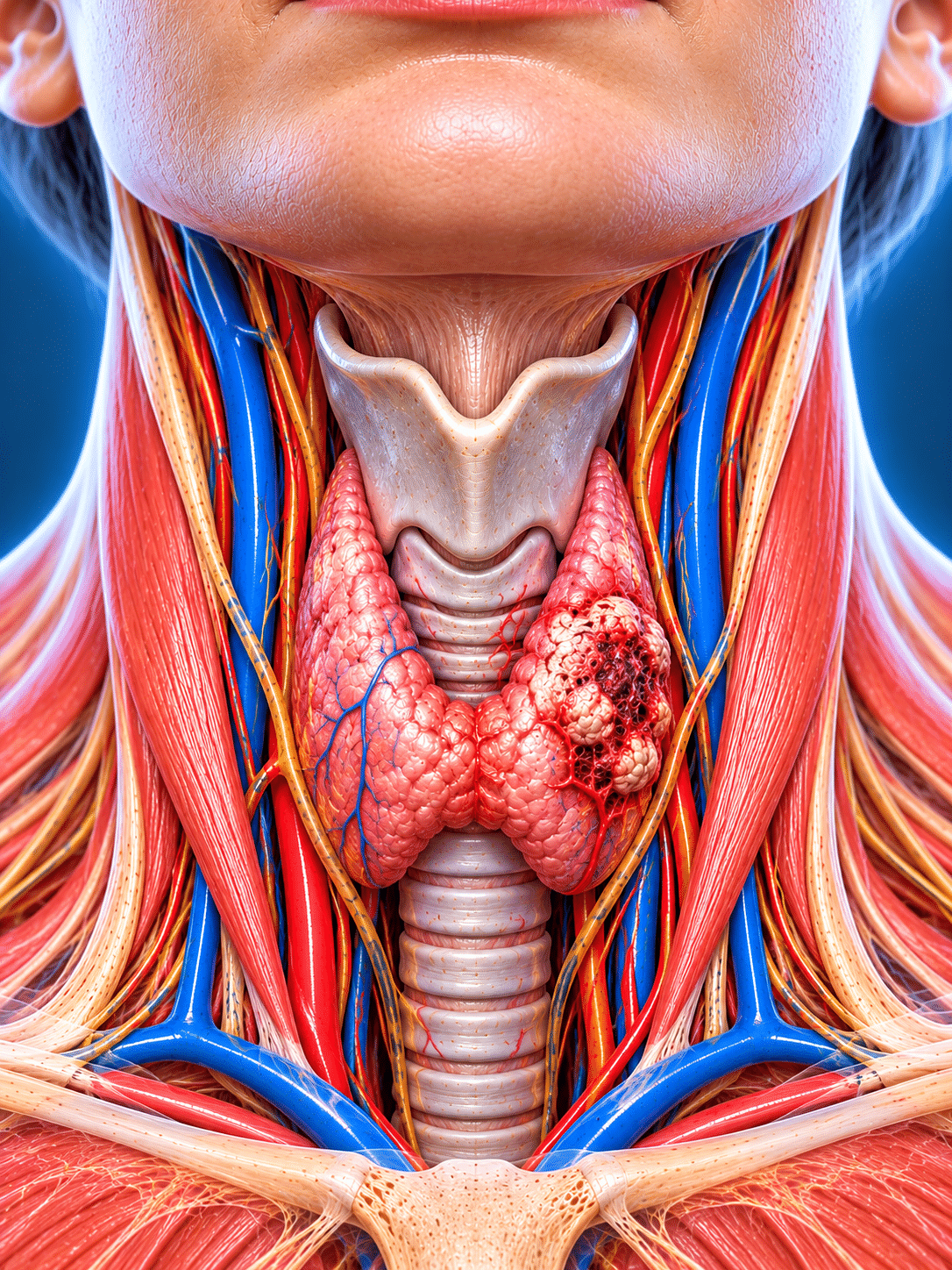
Thyroid cancer develops when abnormal cells in the thyroid gland grow uncontrollably. Different types of thyroid cancer can behave differently and may require different treatment approaches.
The thyroid is a butterfly-shaped gland located at the front of the neck. It produces hormones that help regulate metabolism and several important functions of the body.
A thyroid nodule does not necessarily mean cancer. When a thyroid nodule is suspicious, clinical examination, ultrasound, laboratory tests and tissue sampling may be used to determine the diagnosis.
Once thyroid cancer is confirmed, the treatment plan depends on the cancer type, size, location, spread and other individual clinical factors.
Treatment decisions depend on the type of thyroid cancer, tumour characteristics, lymph node involvement, possible spread and the patient's overall health.
Identifying the specific type of thyroid cancer is an important part of determining the appropriate treatment pathway.
Papillary thyroid cancer is the most common type of thyroid cancer. It can sometimes involve nearby lymph nodes and is evaluated according to tumour characteristics and extent.
Follicular thyroid cancer is a differentiated thyroid cancer whose treatment depends on the tumour characteristics and whether it has spread beyond the thyroid.
Medullary thyroid cancer develops from C cells of the thyroid and may require specific evaluation and treatment planning.
Anaplastic thyroid cancer is an uncommon and aggressive form of thyroid cancer that requires prompt specialist evaluation and multidisciplinary treatment planning.
Thyroid cancer may sometimes be detected without noticeable symptoms. When symptoms occur, persistent changes in the neck should be medically evaluated.
A new or enlarging lump in the neck may require clinical evaluation.
Persistent swelling in the front or side of the neck should be assessed when it does not resolve.
Persistent difficulty swallowing may occur when a thyroid tumour affects nearby structures.
Breathing difficulty requires medical assessment, particularly when it is new or persistent.
Persistent hoarseness or changes in voice may require evaluation of the thyroid and nearby structures.
Enlarged or persistent lymph nodes in the neck may require further investigation.
Evaluation of a thyroid nodule or suspected thyroid cancer may involve clinical examination, ultrasound, laboratory investigations and tissue sampling.
The exact investigations depend on the thyroid nodule, clinical findings and information required to establish the diagnosis and treatment plan.
Staging and risk assessment help the treatment team understand the extent of thyroid cancer and determine an appropriate management strategy.
The size and characteristics of the thyroid tumour are important when determining the extent of disease.
Evaluation of lymph nodes in the central and lateral neck can help determine whether cancer has spread beyond the thyroid.
Involvement of surrounding structures such as the windpipe, swallowing passage or nerves can influence surgical planning.
Additional investigations may be performed when clinically indicated to assess possible spread to distant organs.
Surgery is an important treatment option for many thyroid cancers. The extent of surgery depends on the type, size and location of the tumour and whether lymph nodes or nearby structures are involved.
Removal of one thyroid lobe may be appropriate for selected thyroid cancers depending on tumour characteristics and clinical assessment.
Removal of the entire thyroid gland may be recommended for selected thyroid cancers based on tumour characteristics and treatment goals.
Removal of selected lymph nodes from the central neck may be considered when nodal disease is present or when clinically indicated.
When thyroid cancer has spread to lateral neck lymph nodes, appropriate lymph node surgery may be considered.
Thyroid surgery requires careful assessment of the thyroid gland, lymph nodes and nearby structures in the neck. The surgical approach is selected according to the individual case.
Depending on the diagnosis, surgery may involve removal of part or all of the thyroid gland.
When thyroid cancer involves lymph nodes in the neck, lymph node surgery may be incorporated into the treatment plan.
Some patients may require additional treatment after surgery, depending on the type and risk characteristics of the thyroid cancer.
Selected patients with differentiated thyroid cancer may be considered for radioactive iodine treatment after surgery.
Thyroid hormone replacement is generally required after total thyroidectomy and may also be used as part of ongoing management.
Follow-up may involve clinical examination, blood tests, ultrasound and other investigations depending on the individual cancer and treatment.
Patients with advanced or recurrent disease may require additional specialist treatments based on tumour characteristics and previous treatment.
Thyroid cancer management may involve coordination between surgical oncology, endocrinology, pathology, radiology, nuclear medicine and other specialists depending on the patient's needs.
Review the thyroid nodule, clinical findings, ultrasound and available diagnostic reports.
Tissue sampling and pathology are used when required to establish the diagnosis.
Surgery and additional treatment options are considered according to the cancer type and extent.
Ongoing monitoring is planned according to the diagnosis, treatment and individual risk profile.
Thyroid cancers can differ considerably in their biological behaviour and extent. The appropriate treatment plan depends on the specific diagnosis and individual clinical findings.
A detailed review of ultrasound findings, biopsy reports, imaging and pathology helps determine which treatment options may be appropriate.
Treatment planning may take into account:
The treatment journey begins with accurate diagnosis and continues through treatment, recovery and appropriate long-term monitoring.
Your symptoms, thyroid examination, ultrasound and previous reports are reviewed.
Biopsy, pathology and appropriate imaging help establish the diagnosis and extent of disease.
Surgery and additional treatment options are discussed according to the individual diagnosis.
Treatment is followed by appropriate recovery planning and continued monitoring.

Dr. Nitin Singhal is a surgical oncologist in Ahmedabad with experience in cancer surgery and the management of solid tumours, including head and neck cancers.
Thyroid cancer surgery is planned after detailed evaluation of the thyroid tumour, pathology, lymph nodes and surrounding structures.
Thyroid cancer treatment requires accurate diagnosis, appropriate evaluation and an individualised treatment plan. Thyroid cancers include papillary, follicular, medullary and anaplastic types, each with different clinical characteristics and treatment considerations.
Surgery is an important treatment option for many thyroid cancers. Depending on the individual case, surgery may involve thyroid lobectomy, total thyroidectomy and, when indicated, removal of lymph nodes in the neck.
Selected patients may require additional treatment after surgery, including radioactive iodine therapy or thyroid hormone treatment. Long-term follow-up may include clinical examination, blood tests, ultrasound and other investigations according to the individual diagnosis.
Patients seeking thyroid cancer treatment in Ahmedabad can undergo a detailed consultation to review their thyroid ultrasound, biopsy reports, scans and available treatment options.
Read experiences shared by patients following their cancer treatment.
“The treatment process was explained clearly and the team guided us throughout the treatment journey.”
“The consultation was detailed and the treatment options were explained in a clear and understandable manner.”
“We received clear guidance about the diagnosis, surgery and follow-up care.”
Common questions about thyroid cancer diagnosis, surgery and treatment.
The major types include papillary thyroid cancer, follicular thyroid cancer, medullary thyroid cancer and anaplastic thyroid cancer.
No. Many thyroid nodules are not cancerous. When a nodule has suspicious characteristics, further evaluation such as ultrasound and, when indicated, fine-needle aspiration may be recommended.
Surgery is an important treatment for many thyroid cancers. Whether surgery is appropriate and how much thyroid tissue should be removed depends on the type, size, location and extent of the cancer.
A lobectomy removes one lobe of the thyroid, while a total thyroidectomy removes the entire thyroid gland. The appropriate procedure depends on the individual diagnosis and treatment plan.
Lymph node surgery may be recommended when thyroid cancer has spread to the lymph nodes or when clinical and imaging findings indicate that lymph node treatment is appropriate.
Not every patient requires radioactive iodine. It may be considered for selected patients with differentiated thyroid cancer based on the characteristics and risk of the disease.
Patients who undergo total thyroidectomy generally require thyroid hormone replacement. The medication and follow-up plan are determined by the treating team.
A consultation may be appropriate when a thyroid nodule has suspicious features, a biopsy has confirmed thyroid cancer, or surgery is being considered. Previous ultrasound, biopsy reports and other investigations can be useful during consultation.
Discuss your diagnosis, ultrasound, biopsy reports and available treatment options with a surgical oncology team.

Dr. Nitin Singhal has been recognised for his contribution to cancer care and surgical oncology, reflecting his commitment to advanced surgical techniques, clinical excellence and patient-centred care.
Surgical oncology training from Tata Memorial Hospital, Mumbai.
Expertise across complex and multidisciplinary cancer surgery.
Honoured for excellence in healthcare and surgical oncology.
Focus on evidence-based and personalised cancer treatment.
Recognition that reflects a continued commitment to excellence in cancer care.

