Liver cancer treatment requires careful assessment of the tumour, liver function and overall health. Surgery may be considered for selected patients, while other treatment options may be used depending on the type, stage and extent of disease.
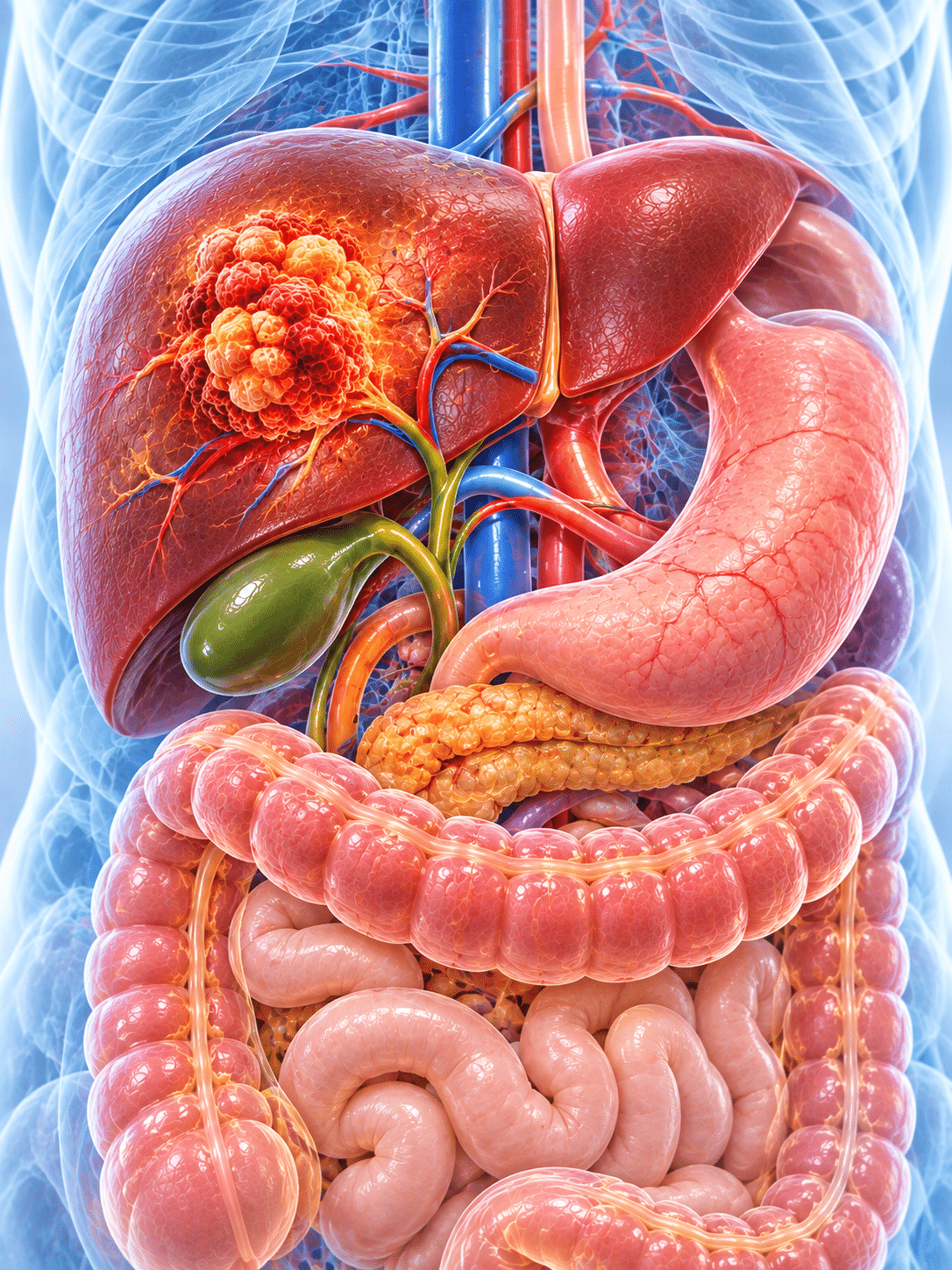
Liver cancer develops when abnormal cells in the liver grow uncontrollably. The most common primary liver cancer in adults is hepatocellular carcinoma, which develops from hepatocytes, the main cells of the liver.
Other primary liver cancers include intrahepatic cholangiocarcinoma and some rarer tumour types.
Cancer can also spread to the liver from another part of the body. These are known as liver metastases and are different from primary liver cancer.
Primary liver cancer starts in the liver. Secondary liver cancer, or liver metastasis, begins elsewhere in the body and spreads to the liver. Treatment planning differs between these conditions.
The liver is the largest internal organ and performs important functions related to metabolism, digestion, detoxification and processing nutrients.
The larger portion of the liver, occupying much of the right side of the upper abdomen.
The smaller lobe extending toward the left side of the upper abdomen.
The liver receives blood through both the hepatic artery and portal vein.
Bile produced by the liver travels through the bile ducts and contributes to digestion.
Hepatocellular carcinoma, or HCC, is the most common primary liver cancer in adults and develops from hepatocytes.
This cancer develops in the bile ducts located within the liver and is treated differently from hepatocellular carcinoma.
A rare primary liver tumour showing features of both hepatocellular carcinoma and cholangiocarcinoma.
Cancer from organs such as the colon, rectum, pancreas, stomach or other sites can spread to the liver.
Several chronic liver conditions can increase the risk of developing liver cancer. Risk varies between individuals.
Long-term hepatitis B infection can increase the risk of hepatocellular carcinoma.
Chronic hepatitis C infection can cause liver damage and increase the risk of liver cancer.
Cirrhosis from different causes is an important risk factor for hepatocellular carcinoma.
Certain metabolic conditions associated with fatty liver disease can increase the risk of liver cancer.
Unintentional weight loss without a clear reason may require medical evaluation.
Persistent discomfort or pain in the upper right side of the abdomen can have several causes and should be assessed when ongoing.
Persistent loss of appetite or feeling full quickly may occur with liver disease or other conditions.
Yellowing of the skin or eyes can occur when liver function or bile flow is affected.
Fluid accumulation or an enlarged liver can sometimes cause abdominal swelling.
Persistent tiredness may occur with liver disease and many other medical conditions.
Diagnosis and staging help determine whether surgery or another treatment approach may be appropriate.
Blood tests may help assess liver function and provide additional information during evaluation.
Ultrasound may be used to identify and evaluate abnormalities within the liver.
Cross-sectional imaging helps assess tumour size, location, blood vessel involvement and disease extent.
A biopsy may be recommended in selected situations depending on imaging findings and the suspected type of tumour.
Surgery may offer a potentially curative treatment option for selected patients with liver cancer. The type of operation depends on tumour location, number and size of tumours, blood vessel involvement, liver function and the presence or absence of disease outside the liver.
Preserving enough healthy liver tissue is an important part of surgical planning, particularly in patients with underlying chronic liver disease or cirrhosis.
Not every liver tumour can or should be treated with surgery. A detailed assessment is required to determine whether liver resection or another treatment is appropriate.
The extent of liver surgery is tailored to the tumour and the amount of healthy liver that needs to be preserved.
Removal of a smaller portion of the liver may be considered for selected tumours in accessible locations.
Removal of one or more anatomical liver segments containing the tumour.
A larger portion of the liver may be removed when required by the location or extent of the tumour.
Some tumours require complex surgery because of their proximity to major blood vessels or bile ducts.
Liver surgery can be performed through an open approach or, in selected patients, through minimally invasive techniques. Laparoscopic or robotic approaches may be considered when the tumour's location and the complexity of surgery make them appropriate.
The choice of surgical approach is based on the tumour, underlying liver condition, previous treatment, anatomy and the surgeon's assessment.
Robotic or laparoscopic liver surgery is not suitable for every patient. Careful case selection is essential, particularly for complex tumours or disease involving major vessels.
The liver is a common site where cancers from other parts of the body can spread. Treatment is different from that of primary liver cancer and depends on the original cancer and extent of metastatic disease.
Some patients with colorectal cancer that has spread to the liver may be evaluated for liver surgery, systemic therapy or a combination of treatments.
Liver metastases can also occur from other primary cancers. Treatment depends on the original tumour, extent of disease, response to treatment and overall clinical condition.
Surgery is only one part of liver cancer treatment. Depending on the diagnosis and stage, other local or systemic treatments may be considered.
Techniques such as radiofrequency or microwave ablation may be considered for selected liver tumours.
Selected patients may be considered for treatments delivered through the blood vessels supplying the tumour.
Targeted medicines may be used for certain advanced liver cancers based on the clinical situation.
Immunotherapy may be considered for selected patients with advanced liver cancer.
Liver transplantation can be a treatment option for selected patients with certain liver cancers, particularly when there is significant underlying liver disease and the tumour meets appropriate selection criteria.
Transplant eligibility is determined through detailed multidisciplinary assessment and depends on tumour characteristics, liver function, overall health and established transplant criteria.
Liver transplantation is not appropriate for every patient with liver cancer. A specialist transplant assessment is required to determine eligibility.
Treatment is individualised according to tumour characteristics, liver function and the patient's overall condition.
When liver cancer cannot be completely removed with surgery, other treatment approaches may be considered. These can include systemic medicines, immunotherapy, targeted therapy or selected liver-directed treatments.
The treatment strategy depends on the type of liver cancer, disease extent, liver function, previous treatment and the patient's overall condition.
Complex liver cancer cases may require coordination between surgical oncology, medical oncology, interventional radiology, hepatology, radiology and pathology.

Dr. Nitin Singhal is a surgical oncologist in Ahmedabad with experience in the surgical management of gastrointestinal and other cancers.
His areas of surgical oncology include gastrointestinal cancer surgery, colorectal cancer surgery, robotic cancer surgery, HIPEC and other complex cancer procedures.
Liver cancer treatment requires a detailed assessment of the tumour, liver function and overall health. Depending on the diagnosis and stage, treatment may include surgery, ablation, liver-directed treatment, systemic medicines, targeted therapy or immunotherapy.
Liver surgery may involve removal of part of the liver containing the tumour. The extent of resection depends on tumour location, size, number of lesions, blood vessel involvement and the amount of healthy liver that can be safely preserved.
Liver metastases from colorectal and other cancers require a different treatment strategy from primary liver cancer. Selected patients may be considered for liver surgery or other local treatment depending on the extent and location of metastatic disease.
If you have been diagnosed with liver cancer or a liver tumour, a specialist evaluation can help clarify the diagnosis, extent of disease and available treatment options.
Surgery can be an important treatment option for selected patients with liver cancer. Whether surgery is appropriate depends on the tumour's size, number, location, blood vessel involvement, liver function and whether the cancer has spread.
Hepatocellular carcinoma, or HCC, is the most common primary liver cancer in adults. Other primary liver cancers include intrahepatic cholangiocarcinoma and rarer tumour types.
Primary liver cancer starts in the liver. Liver metastases are cancers that started in another organ and subsequently spread to the liver. The treatment approach can be different for these two situations.
Robotic liver surgery may be considered for selected patients. Suitability depends on the tumour's location, complexity, liver condition, previous treatment and the surgeon's assessment.
The amount of liver that can safely be removed varies from patient to patient. Surgical planning considers the amount and function of the remaining healthy liver, the tumour location and whether underlying liver disease is present.
Yes. Although cirrhosis is an important risk factor for hepatocellular carcinoma, liver cancer can also occur in people without cirrhosis.
Yes. The liver is a common site of spread for colorectal cancer. Selected patients with colorectal liver metastases may be evaluated for surgery, systemic treatment or other local treatment options.
Liver transplantation may be considered for selected patients with certain liver cancers who meet established transplant criteria. Eligibility requires detailed specialist assessment.
When surgery is not appropriate, other treatments may be considered depending on the type and stage of cancer. These can include liver-directed treatments, targeted therapy, immunotherapy and other systemic treatments.
Get a personalised evaluation to understand your diagnosis, treatment options and whether liver surgery or another treatment approach may be appropriate for your condition.

Dr. Nitin Singhal has been recognised for his contribution to cancer care and surgical oncology, reflecting his commitment to advanced surgical techniques, clinical excellence and patient-centred care.
Surgical oncology training from Tata Memorial Hospital, Mumbai.
Expertise across complex and multidisciplinary cancer surgery.
Honoured for excellence in healthcare and surgical oncology.
Focus on evidence-based and personalised cancer treatment.
Recognition that reflects a continued commitment to excellence in cancer care.

