
Ductal Carcinoma In Situ (DCIS)
DCIS is a non-invasive breast cancer in which abnormal cells are found within the lining of a breast duct and have not spread beyond it.
Breast cancer is one of the most common cancers affecting women. Early diagnosis and an appropriate treatment plan can play an important role in breast cancer care.
Dr. Nitin Singhal provides personalised surgical oncology care with treatment planning based on the type, stage and individual characteristics of the cancer.
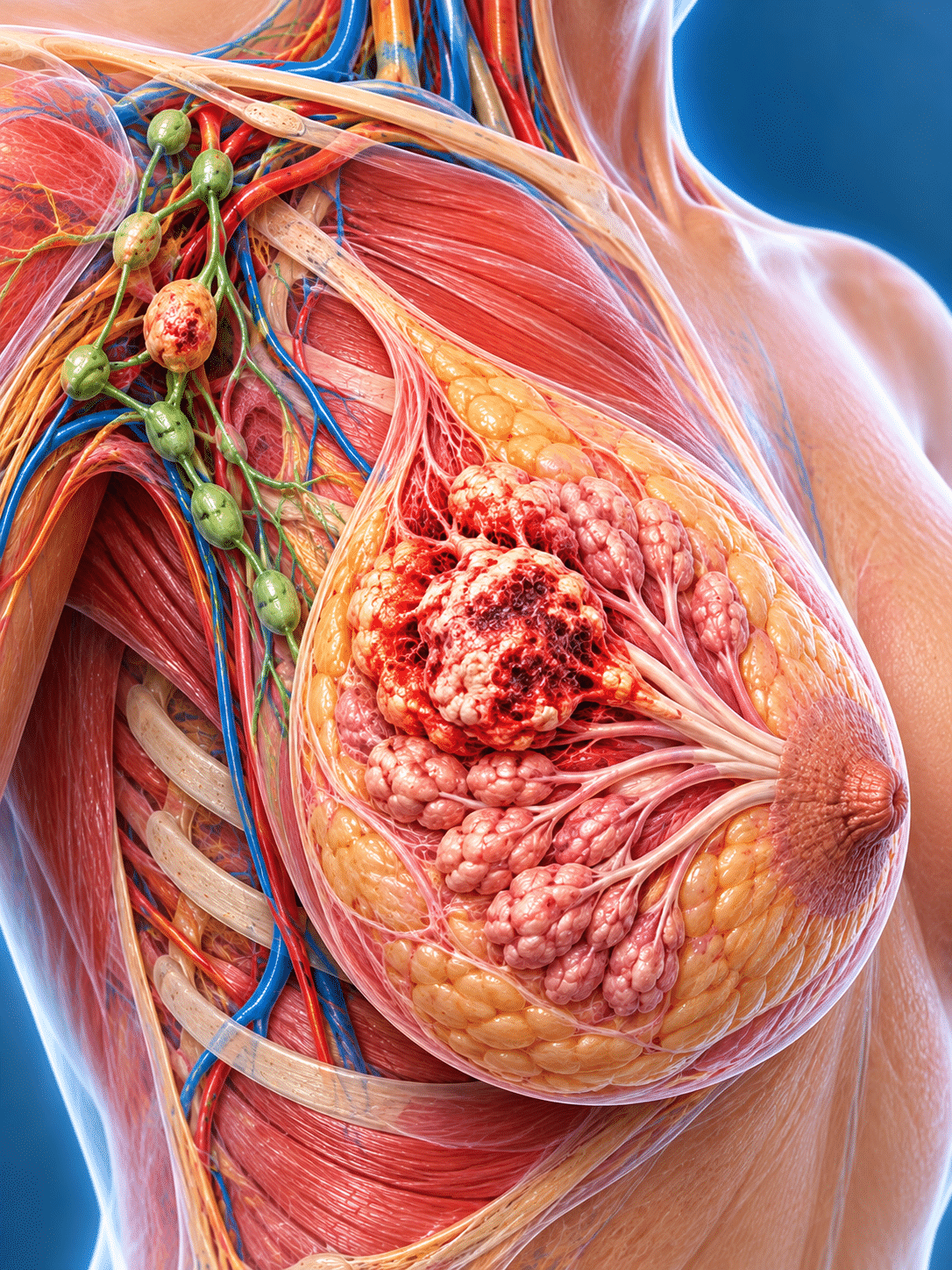
Breast cancer begins in the cells of the breast, commonly in the ducts or lobules. Depending on the type and stage, breast cancer can remain localised or spread to nearby lymph nodes and other parts of the body.
An accurate diagnosis is important for determining the most appropriate treatment strategy. Treatment may involve surgery, chemotherapy, radiation therapy, targeted therapy, hormone therapy or a combination of treatments.
The treatment plan is individualised according to the cancer type, stage, receptor status and the patient's overall health and preferences.
Breast changes should not be ignored. A new lump, change in breast shape, nipple changes, skin changes or unusual discharge may have several possible causes. Timely medical evaluation can help determine the underlying cause and, when cancer is present, support early treatment planning.
Breast cancer is not a single disease. Different biological types can behave differently and may require different treatment approaches.
DCIS is a non-invasive breast cancer in which abnormal cells are found within the lining of a breast duct and have not spread beyond it.
IDC is the most common type of invasive breast cancer. Cancer cells begin in the milk ducts and extend into surrounding breast tissue.
Triple-negative breast cancer does not have estrogen or progesterone receptors and does not make much of the HER2 protein. Treatment planning depends on the individual cancer characteristics.
HER2-positive breast cancers have increased levels of the HER2 protein. Targeted treatments may be considered as part of an individualised treatment plan.
Accurate diagnosis is an important first step in breast cancer treatment. Appropriate imaging and tissue diagnosis are selected according to the patient's condition.
Breast imaging that can help identify suspicious abnormalities and lesions.
May be used to further evaluate breast abnormalities, particularly when additional imaging is required.
May provide additional information in selected patients and clinical situations.
A tissue sample can be examined to establish a definitive diagnosis and determine relevant cancer characteristics.
Once breast cancer is diagnosed, additional testing may be required to understand the cancer's biology and extent.
Determines the specific characteristics of the breast cancer.
Estrogen receptor, progesterone receptor and HER2 status can influence treatment decisions.
Helps determine how extensive the cancer is and guides treatment planning.
Selected patients may benefit from coordinated input from different cancer specialists.
Breast cancer treatment depends on the type and stage of cancer and may involve surgery, systemic treatment, radiation or a combination of therapies.
Breast-conserving surgery, such as a lumpectomy, removes the cancerous area while preserving as much healthy breast tissue as appropriate. Suitability depends on the tumour and individual patient factors.
A mastectomy involves removal of breast tissue and may be recommended depending on tumour size, location, disease extent, genetic considerations or other clinical factors.
Reconstruction may be considered for selected patients following mastectomy. The approach depends on anatomy, cancer treatment plan and individual preferences.
Chemotherapy and radiation therapy may be used before or after surgery depending on cancer type, stage and biological characteristics.
Targeted treatments may be considered for selected breast cancers, including HER2-positive disease, based on pathology and clinical evaluation.
Hormone therapy may be recommended for breast cancers that are sensitive to hormones. The specific treatment depends on the patient's cancer characteristics.
Surgery remains an important part of treatment for many patients with breast cancer. The surgical approach is selected according to the tumour, disease extent, patient factors and overall treatment plan.
Dr. Nitin Singhal focuses on cancer removal while considering breast preservation, appropriate lymph-node evaluation and, when indicated, reconstructive and oncoplastic principles.
Breast-conserving surgery, mastectomy, sentinel lymph-node biopsy, lymph-node surgery, oncoplastic surgery and reconstructive options may be considered according to the diagnosis and treatment plan.
Breast cancer care involves more than removing the tumour. Treatment planning also considers overall health, emotional well-being, recovery and quality of life.
Every breast cancer diagnosis is different. Treatment is planned according to cancer type, stage, pathology and individual patient factors.
Surgery and additional treatment are selected according to disease extent and the overall cancer treatment strategy.
Clear communication can help patients understand surgery, additional therapies, recovery and follow-up requirements.
Follow-up considers treatment recovery, ongoing cancer surveillance and quality-of-life concerns.

Dr. Nitin Singhal is a surgical oncologist with advanced training from Tata Memorial Hospital, Mumbai. His practice focuses on complex cancer surgery and personalised treatment planning.
Breast cancer care is planned according to the patient's diagnosis, tumour characteristics, stage and overall health, with appropriate coordination between surgical and other oncology specialists when required.
Verified public experiences related to cancer surgery, treatment guidance and recovery under Dr. Nitin Singhal's care.
Raj Patel shared that his wife's robotic cancer surgery went smoothly, with minimal pain and a faster recovery.
Nike Parnus highlighted clear explanations, confidence before surgery and attentive support through recovery.
Rachael and George described Dr. Singhal as caring, communicative and reassuring throughout their treatment journey.
A breast cancer treatment plan should balance cancer control, surgical safety, appropriate breast preservation and the patient's long-term recovery needs.
Pathology, receptor testing and staging help define the treatment pathway before surgery or systemic treatment.
Breast conservation or mastectomy is selected according to tumour characteristics, disease extent and individual clinical factors.
Sentinel lymph-node or other lymph-node evaluation may be used where clinically indicated as part of staging and treatment planning.
Recovery and additional therapy are guided by final pathology, stage and the overall multidisciplinary plan.
Answers to common questions about breast cancer diagnosis, surgery and treatment options.
Breast cancer develops when abnormal cells in breast tissue grow uncontrollably. It can begin in the milk ducts or lobules and may remain localised or spread to nearby lymph nodes or other parts of the body.
Possible warning signs include a new breast or underarm lump, changes in breast size or shape, skin changes, nipple changes, nipple discharge or other persistent breast abnormalities. Many breast changes are not cancer, but persistent or concerning changes should be evaluated.
Breast cancer evaluation may involve clinical examination, mammography, ultrasound, MRI in selected cases and biopsy. A biopsy is used to establish a definitive diagnosis.
Examples include ductal carcinoma in situ, invasive ductal carcinoma, triple-negative breast cancer and HER2-positive breast cancer. Treatment depends on the specific diagnosis and biological characteristics.
In selected patients, breast-conserving surgery such as lumpectomy may be appropriate. Suitability depends on tumour size, location, disease extent and individual circumstances.
A mastectomy is a surgical procedure in which breast tissue is removed. Different types may be considered depending on the cancer and treatment plan.
Sentinel lymph node biopsy evaluates the first lymph nodes to which breast cancer may spread. It may be used in selected patients to help determine whether cancer has reached the lymphatic system.
Oncoplastic breast surgery combines cancer surgery with plastic-surgery principles to help preserve or restore breast shape when clinically appropriate. The technique is selected according to tumour characteristics and patient factors.
Depending on cancer type and stage, treatment after surgery may include radiation therapy, chemotherapy, hormone therapy or targeted therapy. The need for additional treatment is determined by pathology and clinical assessment.
Reconstructive surgery may be an option for selected patients after mastectomy. Timing and type depend on the cancer treatment plan, individual anatomy, overall health and patient preferences.
Triple-negative breast cancer is a subtype that does not have estrogen or progesterone receptors and does not have high levels of HER2. Treatment is planned according to the specific cancer and individual clinical factors.
Seek medical evaluation for a new breast lump, persistent breast or nipple changes, unusual discharge, skin changes or another unexplained breast abnormality. If cancer is suspected or diagnosed, specialist evaluation can help determine the appropriate diagnostic and treatment pathway.
If you or a loved one has been diagnosed with breast cancer or has a concerning breast abnormality, discuss the diagnosis and available treatment options with an experienced surgical oncologist.
Book a Consultation
Dr. Nitin Singhal has been recognised for his contribution to cancer care and surgical oncology, reflecting his commitment to advanced surgical techniques, clinical excellence and patient-centred care.
Surgical oncology training from Tata Memorial Hospital, Mumbai.
Expertise across complex and multidisciplinary cancer surgery.
Honoured for excellence in healthcare and surgical oncology.
Focus on evidence-based and personalised cancer treatment.
Recognition that reflects a continued commitment to excellence in cancer care.
