



A diagnosis of prostate cancer can raise many questions about treatment, surgery, recovery, and long-term quality of life. For men whose cancer is suitable for surgical treatment, robotic prostate cancer surgery has become an important minimally invasive approach.
Robotic radical prostatectomy is a procedure in which the surgeon removes the prostate gland and surrounding tissues using robotic-assisted surgical instruments. The robotic system does not perform the surgery independently. Instead, the surgeon controls the instruments from a console while using a magnified, three-dimensional view of the operating area.
For patients considering treatment in Ahmedabad, understanding how robotic prostate cancer surgery works can make discussions with their cancer surgeon more informed. Dr. Nitin Singhal provides advanced robotic cancer surgery as part of his oncology practice in Ahmedabad.
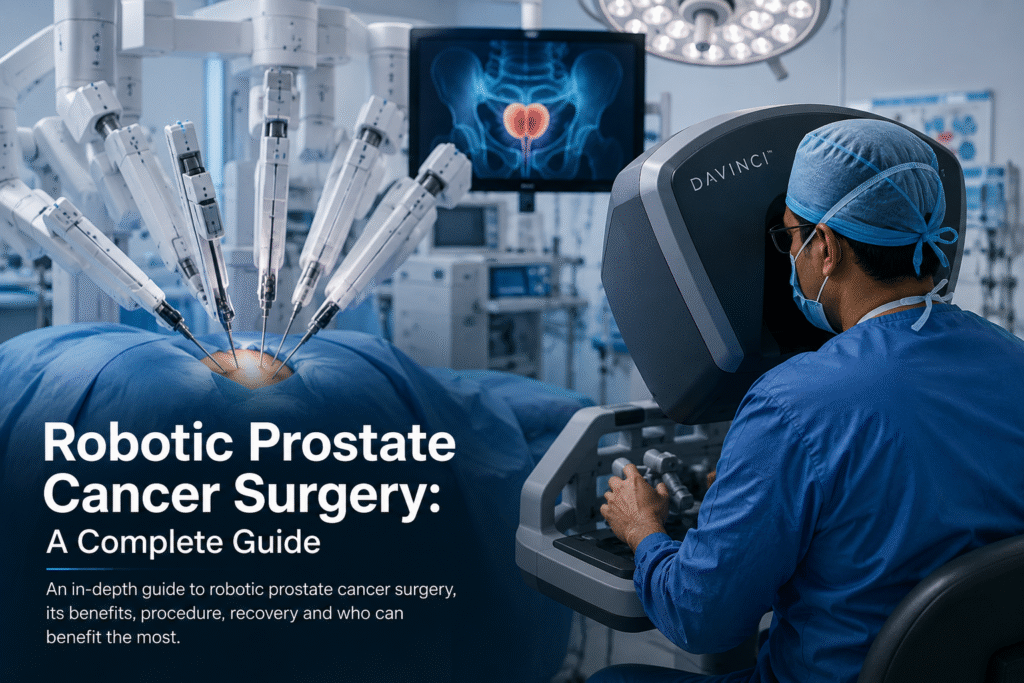
Robotic prostate cancer surgery generally refers to robot-assisted laparoscopic radical prostatectomy. During the procedure, the surgeon makes several small abdominal incisions through which a camera and specialized surgical instruments are introduced.
The camera provides a magnified three-dimensional view of the prostate and nearby structures. The surgeon then controls the robotic instruments from a console, allowing precise movements within the confined pelvic area.
The primary objective is to remove the cancerous prostate while carefully managing surrounding structures. Depending on the cancer's characteristics, nearby lymph nodes may also be removed.
It is important to understand that the robot is an advanced surgical tool controlled by the surgeon. It does not make independent decisions or operate without the surgeon's control.
The exact surgical plan depends on the patient's cancer stage, PSA level, biopsy findings, imaging results, overall health, and other individual factors.
A typical robotic radical prostatectomy involves several stages.
Before surgery, the medical team reviews the diagnosis and determines whether surgery is an appropriate treatment option.
Evaluation may include:
Not every man diagnosed with prostate cancer requires immediate surgery. Depending on the cancer's risk category, treatment options may include active surveillance, radiation therapy, surgery, or other approaches.
During robotic surgery, several small openings are created in the lower abdomen. The camera and surgical instruments are introduced through these openings.
Compared with traditional open surgery, this minimally invasive approach avoids the need for one large abdominal incision.
The surgeon sits at a nearby console and controls the robotic instruments.
The system translates the surgeon's hand movements into precise movements of the instruments inside the patient's body. The high-definition three-dimensional camera provides an enlarged view of the prostate and surrounding anatomy.
The surgeon separates the prostate from surrounding tissues and removes the prostate gland along with the seminal vesicles. Nearby lymph nodes may also be removed when clinically appropriate.
In selected patients, a nerve-sparing approach may be possible.
Important nerves responsible for erectile function run close to the prostate. When the cancer's location and extent allow it, the surgeon may attempt to preserve these structures.
However, nerve preservation is not appropriate or possible for every patient. Cancer control remains the primary objective, and the surgical approach is individualized according to the location and extent of the tumor.
After removing the prostate, the bladder is reconnected to the urethra so urine can pass normally. A urinary catheter is generally used temporarily while the connection heals.
The removed tissue is sent for pathological examination, which provides additional information about the cancer and helps determine whether further treatment or monitoring is needed.
The prostate is located deep within the pelvis, surrounded by important nerves, blood vessels, the bladder, and the rectum. This makes prostate surgery technically demanding.
Robotic prostate cancer surgery provides the surgeon with enhanced visualization and highly maneuverable instruments that can be useful when operating within this confined anatomical space.
Potential advantages of a robotic approach can include:
However, robotic surgery should not be presented as automatically superior for every patient. Evidence summarized by the National Cancer Institute indicates that functional outcomes between open and robot-assisted prostatectomy can be similar in experienced hands, particularly over short- to mid-term follow-up.
The surgeon's experience, appropriate patient selection, cancer characteristics, and quality of overall cancer care remain extremely important.
Robotic prostate cancer surgery is commonly considered for selected men with prostate cancer that can be treated surgically, particularly when the disease is confined to the prostate.
The National Cancer Institute notes that radical prostatectomy is generally used for patients who are in suitable health and whose tumor is confined to the prostate, although treatment decisions vary according to stage and individual circumstances.
Your doctor may consider factors such as:
For some men with low-risk prostate cancer, active surveillance may be appropriate rather than immediate surgery.
Therefore, robotic surgery should be recommended only after a detailed evaluation rather than simply because robotic technology is available.
One of the major concerns for men undergoing prostate cancer surgery is urinary continence.
Temporary urinary leakage can occur during the recovery period. Continence generally improves as the tissues heal and the urinary control mechanism adapts after surgery.
The surgical technique, individual anatomy, cancer characteristics, age, baseline urinary function, and other factors can influence recovery.
Pelvic floor exercises may also be recommended as part of postoperative rehabilitation.
Patients should discuss expected recovery and continence outcomes with their surgeon before deciding on treatment.
Erectile function is another important consideration.
The nerves involved in erections run close to the prostate. When cancer location permits, nerve-sparing techniques may be used to reduce the risk of nerve injury. However, nerve-sparing does not guarantee preservation of erectile function.
Recovery can take time, and outcomes vary considerably between individuals.
Factors such as:
can affect postoperative sexual function.
A thorough discussion before surgery helps patients understand both the cancer-control goals and potential functional outcomes.
Recovery varies from person to person.
Because robotic radical prostatectomy uses small incisions, many patients can return to normal activities progressively as healing occurs. The exact timeline depends on the patient's health, the complexity of surgery, and postoperative recovery.
During the initial recovery period, patients may be advised to:
The surgical team will provide individualized instructions regarding exercise, driving, work, sexual activity, and other daily activities.
Like any major surgery, robotic prostate cancer surgery carries potential risks.
These can include:
The risk profile varies between patients.
A robotic approach can provide technical advantages, but it does not eliminate surgical risks. Patients should discuss the potential benefits, limitations, and complications with their surgeon before treatment.
Both open and robotic radical prostatectomy aim to remove the prostate and treat appropriately selected prostate cancer.
The main difference is how the surgeon accesses the prostate.
In open surgery, the prostate is removed through a larger incision. In robotic surgery, the procedure is performed through several smaller incisions using robotic-assisted instruments controlled directly by the surgeon.
Robotic surgery can provide:
However, robotic technology alone does not determine the success of cancer treatment. Surgical expertise and appropriate treatment selection remain essential.
Robotic technology is only one part of successful cancer surgery.
The surgeon must understand the cancer's behavior, anatomy, staging, surgical technique, and potential functional consequences. Experience is particularly important when operating around delicate structures such as the nerves and urinary sphincter.
Dr. Nitin Singhal is an experienced cancer surgeon in Ahmedabad with expertise in advanced robotic-assisted cancer surgery. His practice includes urologic oncology and prostate cancer treatment, with treatment plans tailored to individual patient needs.
For someone considering robotic prostate cancer surgery in Ahmedabad, consultation with an experienced cancer surgeon can help determine whether robotic radical prostatectomy is appropriate and what outcomes may reasonably be expected.
No. The surgeon controls the robotic system throughout the procedure. The technology provides enhanced visualization and allows precise instrument movements.
No. Treatment depends on the cancer's stage, grade, location, overall health, and other individual factors. Some patients may be better suited to active surveillance, radiation therapy, or other treatments.
No. Urinary leakage can occur after prostatectomy, and recovery varies between patients.
No. Nerve-sparing may be possible in selected patients, but erectile function outcomes vary and cannot be guaranteed.
Your cancer stage, biopsy results, PSA, imaging, overall health, and personal preferences need to be evaluated before choosing surgery.
Robotic prostate cancer surgery has become an important minimally invasive option for appropriately selected men with prostate cancer. Robotic radical prostatectomy allows the surgeon to remove the prostate through small incisions while using a magnified three-dimensional view and highly maneuverable instruments.
The goal is not simply to use advanced technology but to achieve effective cancer treatment while considering urinary, sexual, and overall quality-of-life outcomes.
If you are considering robotic prostate cancer surgery in Ahmedabad, a detailed consultation with an experienced cancer surgeon can help you understand whether robotic radical prostatectomy is appropriate for your specific diagnosis.
Dr. Nitin Singhal provides advanced robotic cancer surgery and urologic oncology care in Ahmedabad, with treatment decisions based on the individual patient's cancer characteristics and overall health.


