



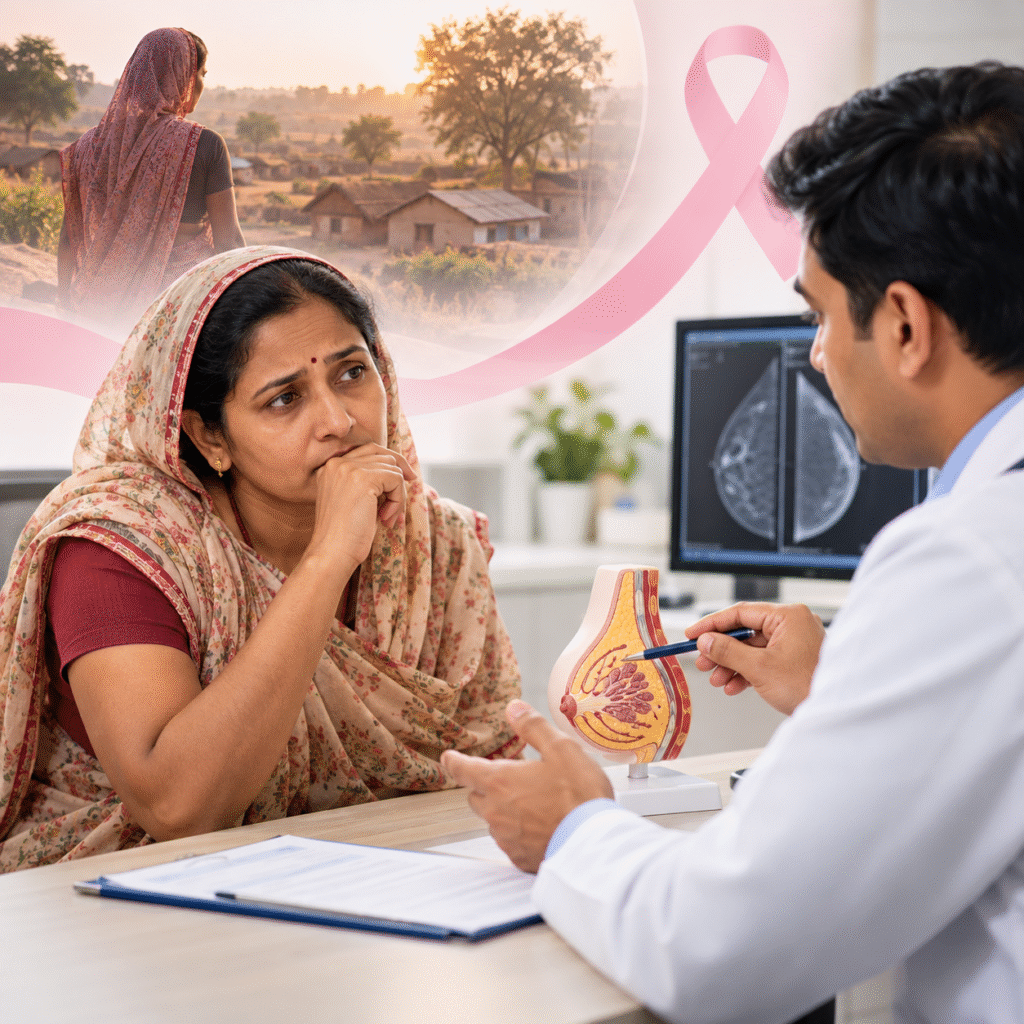
Breast conservation surgery in India offers eligible women with early-stage breast cancer an option to remove the cancer while preserving the breast. Yet fear, limited access to radiotherapy and family pressure can influence treatment decisions.
Last month, a 42-year-old woman from a village came to my clinic with a 2.5 cm lump in her breast. After evaluation, her cancer appeared to be at an early stage, and breast conservation surgery could potentially be an appropriate treatment option.
Before I could explain the available treatments, she said firmly, “Doctor, remove the whole breast. I don't want the cancer to come back.”
Her husband nodded. So did her mother-in-law. The decision seemed to have been made long before she reached the hospital.
Her response reflects a concern that many women experience after a breast cancer diagnosis. For some, removing the entire breast feels like the safest way to prevent the cancer from returning. Others have never been told that breast conservation surgery may be an option.
This raises an important question: Does every woman with breast cancer need to lose her breast to save her life?
In many cases of early-stage breast cancer, the answer is no.
Breast cancer is a major public health concern in India. Its impact extends beyond the disease itself, affecting families, finances, emotional well-being and access to timely treatment.
The figures cited in reports and research highlight several important challenges:
These figures must be understood in the context of differences in screening, healthcare access, treatment availability and the populations being studied.
For women in rural areas, the challenges can be particularly significant. Reaching a specialist may require travelling to another city, taking time away from work and arranging accommodation for treatment.
But access is only one part of the problem. Another is the belief that removing the entire breast is always the safer choice.
One of the most important advances in breast cancer treatment is the recognition that removing the entire breast is not necessary for every patient.
For appropriately selected women with early-stage breast cancer, breast conservation surgery followed by radiotherapy can provide long-term survival outcomes comparable to mastectomy.
This approach is supported by landmark clinical trials, including the National Surgical Adjuvant Breast and Bowel Project B-06 trial and the Milan trial, which helped establish breast-conserving treatment as an effective option for eligible patients.
Breast conservation surgery, also called breast-conserving surgery, involves removing the cancerous tumour along with an appropriate margin of surrounding healthy tissue while preserving the remaining breast.
Depending on the individual case, the procedure may be followed by radiotherapy to reduce the risk of cancer returning in the breast.
The objective is to remove the cancer effectively while preserving as much of the natural breast as medically appropriate.
A mastectomy involves removing the entire breast. It may be necessary or preferable in certain clinical situations, depending on tumour size, the extent of disease, genetic risk, previous treatment, patient preference and other medical considerations.
Neither operation is automatically the right choice for every patient. The decision should be based on an individual assessment by the treating cancer team.
Modern oncoplastic breast surgery combines cancer surgery with techniques intended to maintain or improve the breast's shape after tumour removal.
For suitable patients, these techniques may help surgeons remove the tumour safely while improving cosmetic outcomes.
However, breast conservation surgery does not mean that every woman can avoid mastectomy or that recurrence is impossible. The appropriate treatment depends on the cancer's characteristics and the patient's circumstances.
The essential point is that eligible women should understand their breast cancer treatment options before making an irreversible decision.
The decision to remove the entire breast is rarely influenced by one factor alone. Fear, practical difficulties, social expectations and the availability of treatment can all play a role.
A cancer diagnosis creates enormous uncertainty. Many patients understandably want the treatment that feels most definitive.
For some women, removing the entire breast seems like a way to eliminate the possibility of recurrence. However, mastectomy does not eliminate every risk of cancer returning, and breast conservation surgery with appropriate radiotherapy can be an effective treatment for eligible patients.
A study discussed in the original source material reported that fear of recurrence was a leading reason for choosing mastectomy among women with early breast cancer.
This highlights the importance of explaining the benefits, limitations and potential risks of each surgical option in language patients can understand.
Breast conservation surgery commonly requires radiotherapy after the operation. Depending on the clinical situation and prescribed treatment schedule, this can involve repeated visits to a treatment centre.
For a woman living in a village, travelling to a city can mean additional expenses for transport, accommodation, food and childcare. If she or her family members earn daily wages, the financial burden can be substantial.
Limited access to radiotherapy can therefore influence the choice of surgery, even when breast conservation might otherwise be medically appropriate.
Improving access to radiotherapy, providing financial assistance and offering practical support can help patients make decisions based on their medical needs rather than travel constraints alone.
In many families, a breast cancer diagnosis becomes a decision involving the husband, parents, in-laws and other relatives.
Family support can be valuable during treatment. However, problems arise when the patient's own concerns, preferences and understanding of the available options are overlooked.
Some women may fear being blamed if the cancer returns. Others may believe that preserving the breast is less important than removing it completely, regardless of their medical eligibility.
As doctors, we must make space for the patient to ask questions and express her preferences. Family members should be included in counselling when the patient wishes, but the woman's informed decision must remain central to her care.
Early diagnosis can make breast cancer treatment more manageable and may increase the range of available options.
However, symptoms can go uninvestigated because of fear, limited awareness, financial difficulties or difficulty reaching healthcare facilities.
Some women may delay seeking medical advice because a breast lump is painless. Others may consult a healthcare professional but face delays before receiving specialist evaluation.
When the disease is more extensive, breast conservation may become difficult or unsuitable.
Improving awareness, encouraging timely assessment of breast changes and strengthening referral pathways can help women reach appropriate care earlier.
Breast conservation and oncoplastic surgery require appropriate training, infrastructure and coordinated care.
Specialist services may be concentrated in larger cities, making them difficult to access for patients living in smaller towns and villages.
Expanding specialist training, improving referral networks and strengthening cancer services outside major metropolitan areas can help more women understand and access appropriate treatment options.
One of the most encouraging findings cited in the original article is that some women who initially preferred mastectomy changed their decision after receiving proper counselling.
The study referenced in the source material reported that approximately 20% of women changed their preference to breast conservation following counselling.
This finding deserves attention because it suggests that treatment decisions can be influenced by how clearly the available options are explained.
A woman may arrive believing that mastectomy is her only chance of survival. After discussing her diagnosis, surgical options, radiotherapy requirements, recurrence risks and expected outcomes, she may discover that breast conservation is a reasonable alternative for her.
Counselling does not mean persuading every woman to preserve her breast. Some women will continue to prefer mastectomy after understanding the options, and that preference deserves respect.
The goal is not to promote one operation for everyone. It is to ensure that every eligible patient makes an informed decision without being driven solely by fear or misinformation.
Improving breast cancer care requires action at several levels.
Community health workers, including ASHA and ANM workers, can help improve awareness of breast cancer symptoms and encourage women to seek medical evaluation when they notice changes.
Breast awareness and prompt assessment of symptoms are important. Screening recommendations should also be tailored to current clinical guidance and individual risk.
Every woman who may be eligible for breast conservation should receive a clear explanation of the available surgical options.
Doctors should discuss the benefits and limitations of breast conservation and mastectomy, the role of radiotherapy, possible side effects, cosmetic outcomes and the risk of recurrence.
Where appropriate, family members can participate in these discussions with the patient's consent.
Expanding radiotherapy capacity beyond major cities could reduce travel-related barriers.
Patients may also benefit from appropriate shorter-course radiotherapy schedules when clinically suitable. Financial support for transport, accommodation and treatment-related expenses can make a meaningful difference.
Expanding access to trained breast and oncoplastic surgeons can help eligible patients explore breast-preserving approaches closer to home.
Multidisciplinary cancer care is essential so that surgical decisions are coordinated with pathology, medical oncology and radiation oncology.
Eligible patients should receive guidance about Ayushman Bharat and applicable state healthcare schemes, along with any available support for travel and accommodation.
Clear information about treatment costs can help families plan care without unnecessary delays.
A breast cancer diagnosis can make the future feel uncertain. It is natural to feel afraid, to want the cancer removed completely and to worry about whether the disease will return.
But fear should not be the only factor guiding your treatment decision.
If you have been diagnosed with early-stage breast cancer, ask your surgeon:
“Am I a candidate for breast conservation surgery?”
You can also ask:
Your doctor can help you understand which options are medically appropriate for your individual situation.
For many eligible women, breast conservation surgery offers a way to treat early breast cancer while preserving the breast. For others, mastectomy may be the more appropriate choice. Both decisions should be based on informed discussion, clinical evidence and the patient's preferences.
As surgeons, our responsibility is not only to remove cancer. It is also to help patients understand their options, preserve their dignity and support them throughout treatment.
Every woman deserves access to accurate information, appropriate treatment and the opportunity to make an informed decision about her own body.
Dr. Nitin Singhal is a surgical oncologist in Ahmedabad, Gujarat, specialising in cancer surgery, including robotic and advanced surgical procedures. Patients seeking advice about breast cancer treatment should consult a qualified cancer specialist to understand the options appropriate for their diagnosis.
Book a consultation: drnitinsinghal.com
Medical disclaimer: This article is for educational purposes and does not replace an individual medical consultation. Treatment decisions depend on the patient's diagnosis, tumour characteristics, overall health and preferences.


